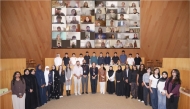
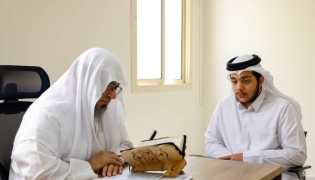
Doha, Qatar: The Ministry of Awqaf and Islamic Affairs, represented by the Institute of Da’wah and Islamic Sciences, organised a specialised scientific training course titled “Contemporary Jurisprudential Issues in Financial Transactions” as part of its 2026 Shariah Muftis Forum training programme.
The initiative comes in response to the rapid developments in the financial and economic sectors and aims to enhance the capabilities of Shariah scholars and muftis in addressing modern financial issues through sound Islamic jurisprudence.
The course sought to strengthen the scientific and methodological qualifications of muftis working within the Islamic Network, enabling them to address contemporary financial challenges in accordance with established principles of Islamic jurisprudence and provide well-founded fatwas that meet the evolving needs of individuals and institutions.
Leading the course was Prof Dr. Ali Mohiuddin Al-Qaradaghi, one of the foremost scholars in contemporary Islamic economics and finance. He introduced participants to the methodology of “Fiqh Al-Mizan” (Jurisprudence of Balance), which seeks to harmonise the immutable principles of Islamic law with changing economic realities. He emphasised that the basic rule governing financial transactions is permissibility unless clear evidence dictates otherwise, while upholding the objectives of Shariah in preserving wealth, promoting justice, preventing harm, and easing hardship.
Dr. Al-Qaradaghi explained that this balanced approach avoids both excessive rigidity and undue leniency, making it a valuable framework for evaluating modern financial products and practices. The course explored key contemporary issues in Islamic finance through four main themes, combining theoretical foundations with practical applications and relevant Shariah guidelines.
The first theme focused on investment in stocks and mixed companies. Participants examined the distinctions between inherently prohibited businesses, such as conventional interest-based banks and tobacco companies, fully Shariah-compliant enterprises, and mixed companies whose primary activities are permissible but may involve certain non-compliant financial dealings.
Dr. Al-Qaradaghi highlighted the contemporary scholarly approach of applying regulatory criteria and profit purification mechanisms, allowing investment under specific conditions while requiring the removal of any impermissible income from returns.
The second theme addressed cryptocurrencies and digital currencies. Dr. Al-Qaradaghi stressed that Shariah rulings should be based on a thorough understanding of the nature, characteristics, functions, and consequences of these assets rather than their labels. He discussed concerns related to extreme volatility, high risk, uncertainty, limited legal protection, and the potential for misuse. At the same time, he noted the potential benefits of blockchain technology in developing more transparent and disciplined financial systems capable of supporting legitimate Islamic alternatives.