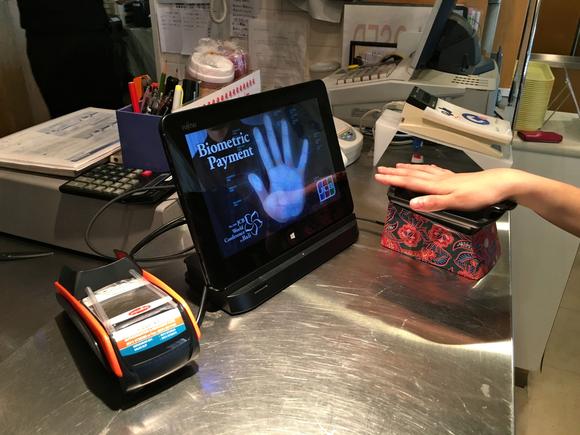
Doha: A new cashless and cardless payment system that the Japanese government has started testing since June last year aims to ease ways for foreign tourists visiting the Land of the Rising Sun. A wave of cashless and cardless payment systems are sprouting up in Japan one after another. Thanks to the marriage of finance and technology, consumers are now able to carry out transactions with nothing more than a touch or wave of a finger.
The technology is more convenient for those visiting the country and aims at a hassle free vacation for the plethora of tourists arriving for the Tokyo Olympics and Paralympics in 2020.
Liquid, a Tokyo-based company, is behind the revolution and is rapidly changing the way consumers pay and the company is aiming to take its technology beyond Japanese borders, targeting retailers in the Middle East, Philippines and Sri Lanka.
Bringing the technology to the Middle East region is Liquid Sistemas Biométricos Brasil (Liquid Brasil) which has tied up with the Japanese firm for use of the technology and enter business tie ups with companies from the region.

“The technology will be used during specific events at 2020 Tokyo Olympics and Paralympic Games and all it will take is just a swipe of a finger to make you payments,” said Marcio Abreu – CEO of Liquid Brasil.
“During the ongoing FIFA 2018 World Cup in Russia the implementation of Fan ID was very successful. Just imagine if we also biometrically register the fans during their initial process and they could also pay for things using only their finger including eventually accessing the stadiums,” said Abreu.
“It has its advantages in finger technology there are adequate safeguards, it is safe and very convenient,” added Abreu, who earlier served as a Senior Director of Cisco do Brasil and has experience in implementing innovative technology projects.
“The technology will be ideal for the mega events to be held in the region such as FIFA World Cup 2022 in Qatar and other events in the region,” added Abreu.
Additionally, this system will take the place of current government requirements that force tourists to show their passports when checking into various inns and hotels per the past, helping expedite authorization, access, and authentication.
Accordingly, foreign tourists will register their fingerprints when they enter the country, which is already mandatory in many countries. Once they do so, they’ll be able to make purchases by just having a little fingerprint reader scan their digit.
Liquid, is leading Japan’s shift away from cash and credit cards. The company’s technology allows users to complete payments by simply placing their fingers on a device, which has now been made available at 1,000 points across the country. Credit cards can be registered, and balances can be charged online in advance.
Aside from the obvious benefits in terms of convenience, biometric authentication can provide a highly secure payment method, with a fraction of the risk of forgery or personal information theft involved with conventional systems.
For a country so used to dealing in cash, it may come as something of a shock in Japan when people no longer even need to get their wallets out to pay for something.
That may happen sooner than many expect, as a number of companies race to develop payment systems using face and fingerprint recognition technology.
Introducing the system is part of the government’s efforts to increase the annual number of foreign tourists to 40 million by 2020. It is also aiming to demonstrate the country’s advanced technology by having tourists use the system when they visit Japan for the Tokyo Olympics and Paralympics.