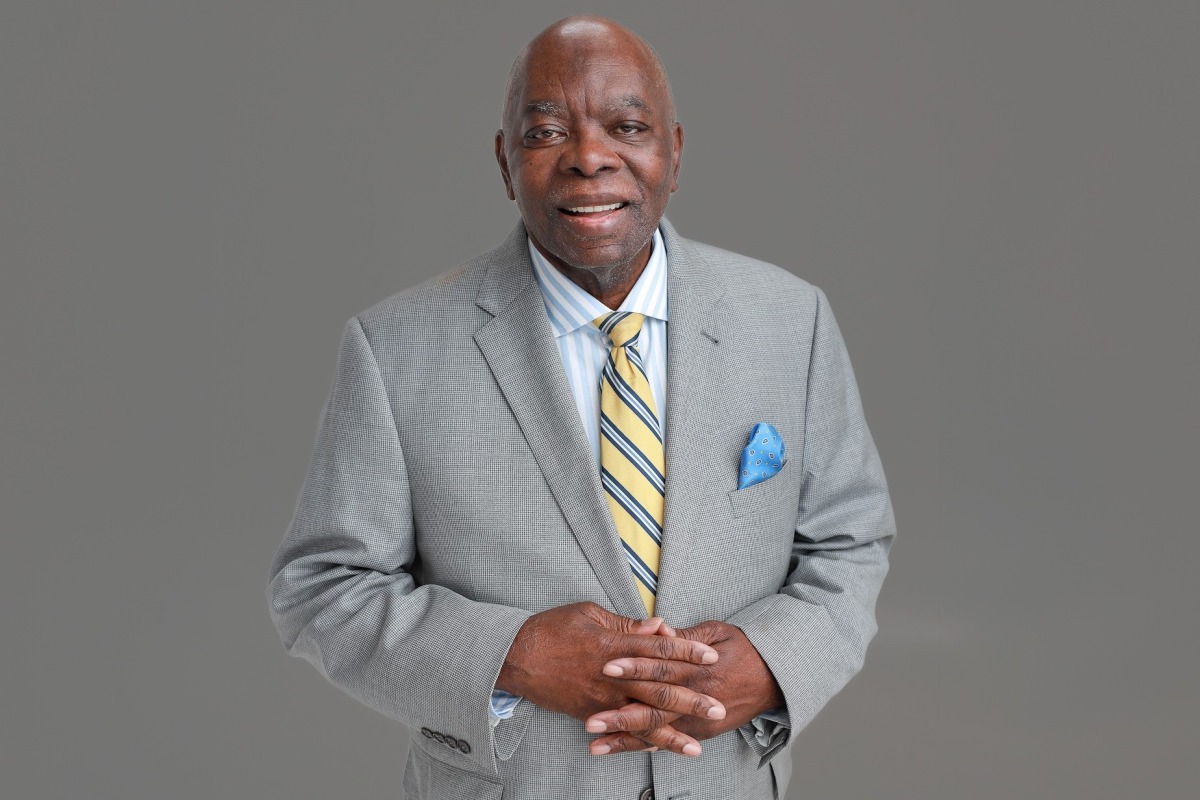
Professor and Program Director of Islamic Art, Architecture and Urbanism at HBKU’s College of Islamic Studies, Dr. Akel Ismail Kahera
Doha: A new study by researchers at Hamad Bin Khalifa University (HBKU) has found that adopting Unesco’s Historic Urban Landscape (HUL) approach could help Qatar better integrate cultural heritage into future urban development, calling for stronger policies, updated legislation and greater community participation to protect both historic sites and living traditions.
The study, Cultural Heritage Management and Policies in Qatar: A Case Study of the Historic Urban Landscape Approach in Education City, examines how Qatar can balance rapid modernisation with heritage preservation, using Education City as a model of how historic landscapes can be integrated into contemporary urban planning.
Professor and Program Director of Islamic Art, Architecture and Urbanism at HBKU’s College of Islamic Studies, Dr. Akel Ismail Kahera, told The Peninsula that the research addresses an important gap in both academic literature and heritage management.
“This study was motivated by a recognised lacuna in both scholarly literature and heritage management practice,” he said, noting that previous research had largely focused on Qatar’s contemporary urban growth while paying comparatively little attention to cultural heritage governance.
He explained that Unesco's Historic Urban Landscape framework, adopted in 2011, provides a broader understanding of heritage by moving beyond the preservation of individual monuments to consider the wider urban context, natural environment and intangible cultural traditions.
“The HUL framework transcends the narrow preservation of individual monuments in favour of holistically integrating conservation processes within broader urban planning and development objectives,” Dr. Kahera said.
The research also warns against what it describes as “cultural amnesia”, the gradual loss of historical memory through the disappearance of heritage sites during periods of rapid urbanisation.
According to Dr. Kahera, the loss extends well beyond buildings themselves.
“The disappearance of these built forms dismantled the very spatial frameworks through which kinship networks were maintained, communal memory transmitted, and everyday religious practice organised, severing the intergenerational continuities upon which living cultural heritage ultimately depends,” he said.
Education City was selected as the study’s principal case because it reflects Qatar’s evolving approach to heritage conservation over the past decade.
While the area underwent major expansion following the establishment of Qatar Foundation’s Education City in 1995, subsequent conservation initiatives have demonstrated that modern development and heritage preservation can coexist.
Dr. Kahera said projects including the conservation of the Al Shaqab Historic Pool and Al Khater House, together with the Herfah traditional crafts programme, illustrate how “knowledge-based urbanism and heritage sensitivity are not mutually exclusive.” “The site now functions as a palimpsest, a layered landscape in which historical traces remain legible within the contemporary built environment,” he added.
The study highlights several successful examples across Qatar where heritage has been integrated into modern urban development.
These include the regeneration of Souq Waqif through adaptive reuse, the restoration of Souq Al Wakrah, and Msheireb Downtown Doha, where four historic houses were preserved and converted into museums while the surrounding district was redeveloped into a contemporary mixed-use neighbourhood.
Within Education City, the study notes that architectural design, transport connectivity and cultural programming have all contributed to maintaining a sense of place.
Traditional Qatari architectural principles were incorporated into early campus buildings, while the Doha Metro Green Line has strengthened physical and symbolic connections between Education City and historic districts such as Msheireb and Souq Waqif.
The Herfah programme at Al Khater House, developed in partnership with The King’s Foundation School of Traditional Arts, was also identified as a key initiative preserving intangible heritage by teaching traditional crafts including geometry, Nabati ornamentation, ceramics, woodwork and gypsum carving.
Beyond conservation, the research argues that heritage management plays a wider social role in strengthening identity and community cohesion.
“Heritage sites transcend their function as instruments of urban branding or tourist attraction, holding substantive value for national identity and collective consciousness,” Dr. Kahera said.
Drawing on the concept of genius loci or “spirit of place,” the study argues that preserving cultural landscapes fosters a sense of belonging that is particularly important in countries experiencing rapid urban transformation.
The researchers also propose a series of policy recommendations aimed at strengthening Qatar’s heritage governance framework.
Among the key proposals is updating the Law on Antiquities No. 2 of 1980 to extend protection to modern architecture dating from the 1950s to the 1970s and to formally recognise intangible cultural heritage such as traditional crafts and living cultural practices.
The study also recommends making Heritage Impact Assessments mandatory for major development projects near heritage sites, strengthening heritage zoning under the Qatar National Master Plan, improving coordination among government institutions and expanding community participation in heritage decision-making.
In addition, the researchers call for extending GIS-based documentation through the Qatar Cultural Historic Information Management System to include modern heritage and climate vulnerability assessments, enabling more proactive and evidence-based conservation planning.
Dr. Kahera said these measures would help ensure that future urban development protects and revitalises Qatar’s cultural heritage rather than replacing it, allowing heritage to remain an integral part of the country’s rapidly evolving urban landscape.