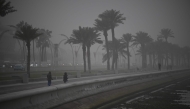
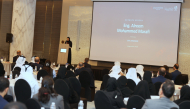
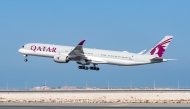
Over the decades, Qatar has undergone a remarkable transformation, establishing itself as a model to emulate in achieving comprehensive development and meeting the aspirations of its citizens, who are considered the cornerstone of societal progress.
Each era of governance has brought multiple accomplishments and distinctive developments, laying the groundwork for a new epoch, shaping the modern renaissance of Qatar. This transformation is evident across various domains such as expansive urbanization, industry, sports, tourism, politics, healthcare, not to mention the significant investment in human capital and diplomacy.
Qatar has always believed in engaging with the external world, forging multi-dimensional relationships and partnerships in harmony with its principles, identity, and culture. These achievements and transformations wouldn’t have been possible without the alignment and coherence in visions and policies among the country’s leadership throughout the decades. Since the 1970s, the contours of a modern state began emerging, showcasing the leadership’s aspirations to transform Qatar from a nation primarily reliant on trade and pearl diving to a country that produces its own food, medicine, and all modern industries. It evolved from merely following global sports events to hosting the largest international tournaments, from observing global politics to actively contributing solutions to complex global issues.
Alongside oil and gas, which formed the pillars of development in the country, leaderships have attributed significant importance to developing the healthcare sector as a fundamental cornerstone for nation-building. Continuous efforts have been made to elevate the level of healthcare services provided in the country.
Hamad Medical Corporation has witnessed the evolution of healthcare services in the state, expanding from one hospital, the Rumailah Hospital, to 12 hospitals. This expansion is a result of the rapid population growth in Qatar, leading to increased demand for healthcare services.
The Rumailah Hospital was established in 1957, followed by Hamad General Hospital, inaugurated in 1982. It offers high-quality healthcare services to inpatients through the vast expertise of the medical staff. The hospital has outpatient clinics comprising over 65 specialized clinics.
Expansion in hospital construction has taken place over past decades, including the Aisha bint Hamad Al-Attiyah Hospital, Al-Wakra Hospital, Communicable Disease Center, Heart Hospital, National Center for Cancer Care and Research, Qatar Rehabilitation Institute, Cuban Hospital, Women’s Hospital, Women’s Wellness and Research Center, Hazm Mebaireek General Hospital, and other healthcare facilities.
Qatar has invested in the healthcare sector over decades through scientific and educational research, exemplified by Weill Cornell Medicine in Qatar, the specialized teaching hospital, and Sidra Medicine equipped with state-of-the-art technological advancements to deliver the highest global standards in healthcare, education, medical research, and clinical practice.
Parallel to the development in the healthcare sector, Qatars recent history reflects a wide interest in urban development, harmonizing with Qatar’s historical and cultural identity and heritage.
One of the prominent features of modern renaissance is the Waqif Souq, one of the most iconic attractions in Doha, a thriving market hosting souvenir gifts, handicrafts, local products, cafes, and restaurants. The souq underwent renovation in 2006.
The name Souq Waqif dates back over a hundred years when trading activities occurred in that area while standing. It became a Qatari heritage site.
The market offers a variety of traditional goods and handicrafts, such as herbs, spices, incense, perfumes, goldsmithing, tailoring, embroidery, traditional Arabic attire for men and women, along with the production of daggers, swords, musical instruments, and the sale of rare birds like falcons and parrots.
Al Bidda Park is one of the oldest and most famous parks in Qatar, blending various natural elements into one place, situated near the Doha Corniche. Formerly known as Al Rumailah Park, it closed in 2014 for renovation before reopening on Feb. 13, 2018, following comprehensive redevelopment and expansion. Covering 1.765 million square meters of green spaces, the park was one of the main destinations for FIFA World Cup Qatar 2022 enthusiasts, hosting a major part of the associated events, including the FIFA Fan Zone festival, featuring diverse entertainment activities.
Among other significant landmarks, the Sheraton Hotel, which opened in the 1980s, is one of Qatar’s landmarks overlooking the West Bay, marking the inauguration in 1982 of the first internationally branded hotel in Qatar, the historic Sheraton Doha Hotel. Not far from the Sheraton Hotel lies the Qatar National Museum, inaugurated in 1975 and renovated in 2019. Designed by the Pritzker Prize-winning architect Jean Nouvel, it is inspired by the desert rose, a natural phenomenon in the region.
The Qatar National Museum stands as an architectural landmark admired by many in the country, reflecting Qatar’s past while shedding light on its present and future.
Among other important landmarks is the Electricity Street, the first street in Qatar to be electrified. It currently forms part of Msheireb, the heart of Doha, representing the first sustainable redevelopment project globally while maintaining its authentic character. After Qatar won in 2010 the bid to host the FIFA World Cup Qatar 2022, the infrastructure and construction sectors witnessed a significant leap, whether it was related to roads, stadiums, railways, or the construction of new airports and ports.
Qatar launched several monumental projects, including Hamad International Airport, Hamad Port, Qatar National Library, Qatar Islamic Art Museum, Lusail City, Doha Metro, and other achievements and initiatives.
Qatar has also invested in educational development programs and skill enhancement to build a generation of educated and skilled youth, aligning with Qatar’s National Vision 2030, which made human development a cornerstone of comprehensive advancement.
Qatar’s policies have reflected in its position in the United Nations’ Human Development Index. In recent years, it has topped the list among Arab countries. This ranking depends on various indicators, notably a country’s progress or lag in healthcare, education, and more.