DOHA: The GCC economies are expected to witness current account and fiscal deficit this year. Qatar’s 2016 growth is expected to be 4.3 percent. Qatar has budgeted for revenues of QR156bn and expenditures of QR202.5bn in 2016, said Dr R Seetharaman, Doha Bank’s Group CEO, while providing an insight on GCC economies to students at the College of the North Atlantic – Qatar (CNA-Q).
He said health, education and infrastructure accounted for the largest share of the 2016 budget. The fiscal deficit is expected to be covered by local and international debt issues. Qatar’s strong investable surplus will enable it to withstand adverse conditions.
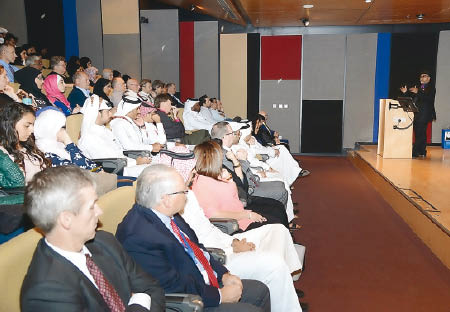
Dr Seetharaman was delivering a lecture on the topic “The Changing Economic Landscape and Opportunities in the Banking Sector” at the CAN-Q.
Speaking on Qatar’s banking sector, he said: “In the near term, Qatar banking sector will be challenging. However, Doha Bank will be cautiously optimistic with focus on Balance Sheet optimisation, Cost optimisation and repricing of assets. Doha Bank believes in sustainable performance as reflected in its performance ratios such as ROAA and ROAE. With liquidity continuing to be challenging we will focus on low cost deposit mobilization. Doha Bank is a consistent performer despite the volatile market conditions. Doha Bank is an innovative Bank and provides innovative solutions leveraging on technology for the benefit of the customer.”
The lecture was hosted as part of the Bank’s ongoing efforts to engage Qatari students in dynamic discussions that enhance their understanding of economic and financial issues, with a view to develop the next generation of Qatari leaders in banking.
On the outlook of the global economy Dr Seetharaman said: “The Global economy is expected to grow by close to 3 percent in 2015. The decline in growth reflects a further slowdown in emerging markets, partially offset by a modest pickup in activity in advanced economies.
US economy rate hike has begun last December however economic recovery is uneven. Japan and Eurozone may still need more easing. Chinese economy grew by 6.9 percent in 2015.
Chinese slowdown a cause of concern to global economies. Brazil and Russia are also struggling, with India only showing growth. Global slowdown on account of struggle to accelerate in emerging economies and advanced economies not recovering soon.
There are concerns among market participants both in advanced and emerging economies on the level of market liquidity. The prospect of rising interest rates in the United States and an economic slowdown in China were contributing to uncertainty and a higher risk of economic vulnerability worldwide.
Highlighting the current trends in Global financial markets, he said: “Since the beginning of this year we have seen the global capital markets fall significantly on account of Chinse yuan devaluation and fall in oil prices. Oil prices below $30 per barrel has raised concerns of deflation and slowdown in global growth. The Currency markets have also witnessed significant volatility. We are seeing funds moving towards safe haven such as Japanese Yen and US treasuries. The risk of currency war has also emerged on account of Yuan devaluation by Chinese Central Bank.”
The Peninsula