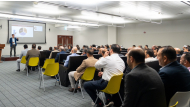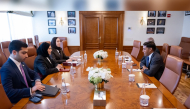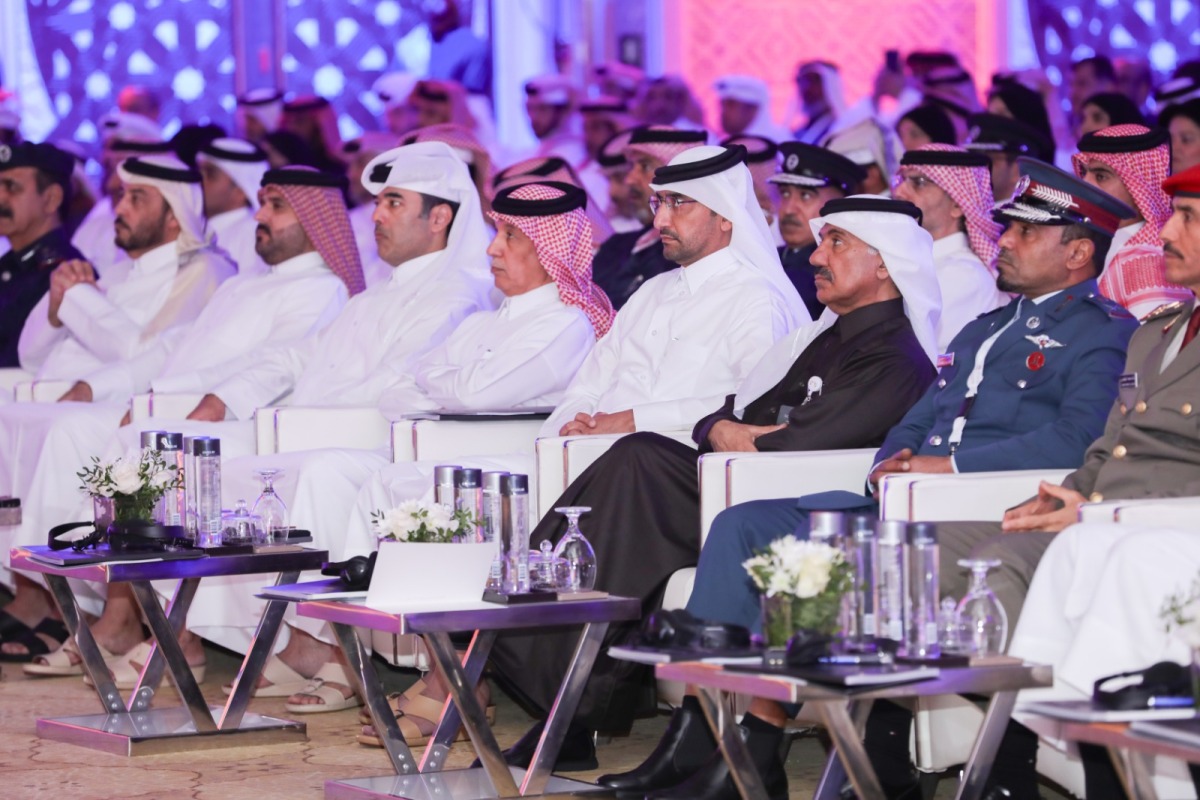
Minister of Justice and Minister of State for Cabinet Affairs H E Ibrahim bin Ali Al Mohannadi, Minister of State for Foreign Affairs H E Sultan bin Saad Al Muraikhi with other dignitaries at Fourth National Human Rights Forum in Doha yesterday.
Doha, Qatar: The Fourth National Human Rights Forum opened yesterday in Doha under the theme “Human Rights at the Heart of Combating Drugs: Challenges and Prospects for Sustainable Solutions,” spotlighting the need to strengthen national responses to traditional drug-related threats amid emerging digital challenges.
The two-day forum is organised by the National Human Rights Committee (NHRC) in partnership with the Ministry of Interior, and in cooperation with the Ministries of Social Development and Family, Education and Higher Education, and Public Health, alongside various international and civil society stakeholders.
The opening session drew high-level participation, including Minister of Justice and Minister of State for Cabinet Affairs H E Ibrahim bin Ali Al Mohannadi, Minister of State for Foreign Affairs H E Sultan bin Saad Al Muraikhi, Chairman of General Authority of Customs (GAC) H E Ahmed bin Abdullah Al Jamal, and Chairperson of the NHRC H E Maryam bint Abdullah Al Attiyah, as well as ambassadors, senior officials, and experts from state institutions.
The forum provides a platform for dialogue among ministries, public institutions, civil society, and key stakeholders to review current challenges, national initiatives, and global best practices in drug control, with a strong emphasis on awareness, prevention, and human rights.
H E Maryam bint Abdullah Al Attiyah emphasized that the forum addresses both the longstanding threats of drug abuse and the emerging challenges posed by digital technologies.
She stated, “We discuss the challenges and risks associated with drugs, which are a destructive scourge, and we aim to develop sustainable solutions to mitigate their negative impact on human rights and sustainable development.”
Al Attiyah highlighted that the rise in drug addiction worldwide, compounded by armed conflicts and political instability in some regions, is now intersecting with new patterns of transnational drug crimes fueled by AI and digital technologies, amplifying social, economic, and security threats.
These developments, she noted, threaten fundamental human rights, including the right to life, health, and an adequate standard of living, underscoring the need for a comprehensive human rights–based approach.
A key outcome of the forum is the call to review national measures to enhance their flexibility and speed of response to emerging challenges, particularly digital ones.
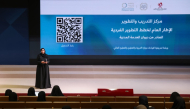
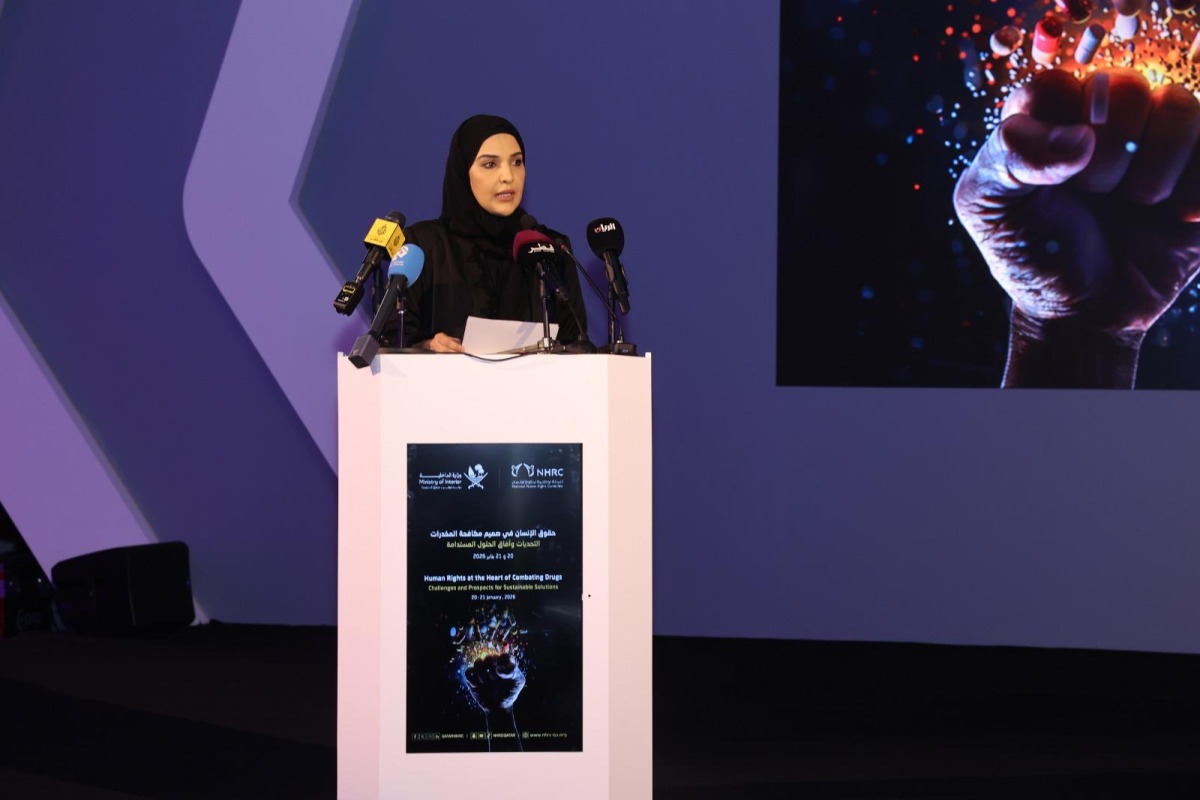 NHRC Chairperson H E Maryam bint Abdullah Al Attiyah addressing the opening session of Fourth National Human Rights Forum in Doha yesterday.
Al Attiyah stressed the importance of empowering youth and children to enjoy a safe digital environment, protected from drug-related risks, while simultaneously advancing rehabilitation, social reintegration, and protection from stigma and discrimination.
She underlined that youth should not only be beneficiaries of prevention programs but partners in shaping solutions, contributing to peer support initiatives and breaking cycles of addiction.
H E Ahmed bin Abdullah Al Jamal reaffirmed that drug control is a comprehensive societal and humanitarian issue, not solely a security concern.
He noted that during 2025, Qatari Customs intercepted 346 drug smuggling attempts, predominantly involving individuals aged 25–35, a demographic critical to national development. Customs also conducted 20 specialised training courses and deployed advanced AI-supported X-ray and backscatter inspection technologies across land, sea, and air ports to strengthen detection capabilities.
Major General Abdullah bin Saqr Al Mohannadi, Director of the Human Rights Department at the Ministry of Interior, highlighted the Ministry’s strategic focus on protecting society from drugs, as outlined in its 2024–2030 plan aligned with Qatar National Vision 2030.
He emphasised the integrated approach combining security, preventive, rehabilitative, and participatory measures, which have contributed to Qatar’s recognition in international indicators for safety and security.
Assistant Undersecretary for Healthcare Regulatory Affairs at the Ministry of Public Health Dr Ghanim Ali Al Mannai reiterated that health is a fundamental human right.
He outlined the Ministry’s preventive and monitoring efforts, including 24/7 oversight of narcotic and psychotropic medications at all national entry points, and strict prescription regulations. He also highlighted the “Naufar” Center, which provides comprehensive, confidential, and accessible care for individuals with substance use disorders, combining preventive, treatment, rehabilitation, and community-based services.
Chief of UNODC Regional Center for Combating Cybercrime in Doha Mustafa Ünal Erten underscored the global scope of the drug crisis, noting that approximately 316 million people worldwide use drugs, with synthetic substances and new consumption methods, such as e-cigarettes, increasingly appealing to youth.
He praised Qatar for its comprehensive human rights–based approach, aligned with international standards, the 2024–2030 national strategy, and the GCC Drug Control Strategy 2025–2028, in which Qatar played an active role.