BY MOHAMMAD SHOEB
DOHA: With only less than five percent investors using the services of professional companies to manage their investments in Qatari stock market”, an industry expert has cautioned against the popular practice of having “self-managed portfolios” and drew parallel saying “it is as risky as buying medicine without consulting a doctor”.
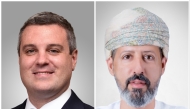
“Professionally managed investing only accounts for around less than five percent of total investments in Qatari stock market,” said Fahmi Alghussein (pictured), CEO of Amwal, one of Qatar’s leading asset management companies. “Still, many investors self-manage their portfolios, and usually do it without the type of proper fundamental analysis that we do. We compare this to buying medicine without consulting a doctor and without getting proper tests.”
Alghussein, in an interview with The Peninsula, said: “It (self-managed portfolios) may work, but it is risky to invest without a proper analysis. We see many stocks currently that have significant downside risk because their current value is much above their fair value. In time, we expect more and more investors to go to asset managers for their investment needs.”
On promising industries that are expected to remain resilient and fetch assured returns, he said that Qatar relatively has a small stock market with few sectors, so it was not easy to pick sectors.
“I would say mainly those (sectors) not affected by oil price drop, subject to their stock price being attractive relative to their long term earnings prospects. Those that will be affected by oil price drop though are stocks to stay away from for now as their stock price is not yet reflecting this drop,” he added. “At Amwal, we invest in companies with good sustainable earnings potential.”
Alghussein highlighted that often companies report strong earnings but they are not sustainable and when earnings eventually decline, stock price declines along with it. There have been many such cases in the past.
Commenting on his company’s performance, he said that Amwal takes pride in being the only asset manager in Qatar to have outperformed the index every year over the last five years.
“It is a testament of our investment process. One can be lucky and get good results in one year, but to do it year after year requires more than luck,” he said.
According to him, investors have now started digging deeper across corporate sectors in terms of how to position with regard to the upcoming 2022 World Cup, and which companies and banks will receive the maximum benefit from the infrastructure spending and other economic activities.
Providing an overview of the GCC market, he said that major markets in the region will continue to remain positive with Saudi Arabia and the UAE continuing to witness vibrant growth driven by their strong hydrocarbons industries and young population.
Alghussein, while highlighting some of the key challenges, said that the availability of right talent for the execution of projects, ease of doing business, logistic related issues such as delays in airports and seaports, custom clearance, dealing with rising prices of raw materials and wages, cost-push inflation and other are some of the important issues that the private businesses in the region will continue to face.
“In general, managing macro-economic fundamentals, avoiding boom-bust growth cycle, licensing and operations related challenges also need to be addressed by the respective governments of the region, including Qatar,” he said in his concluding remarks.
The Peninsula