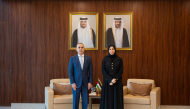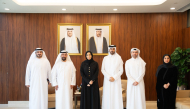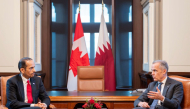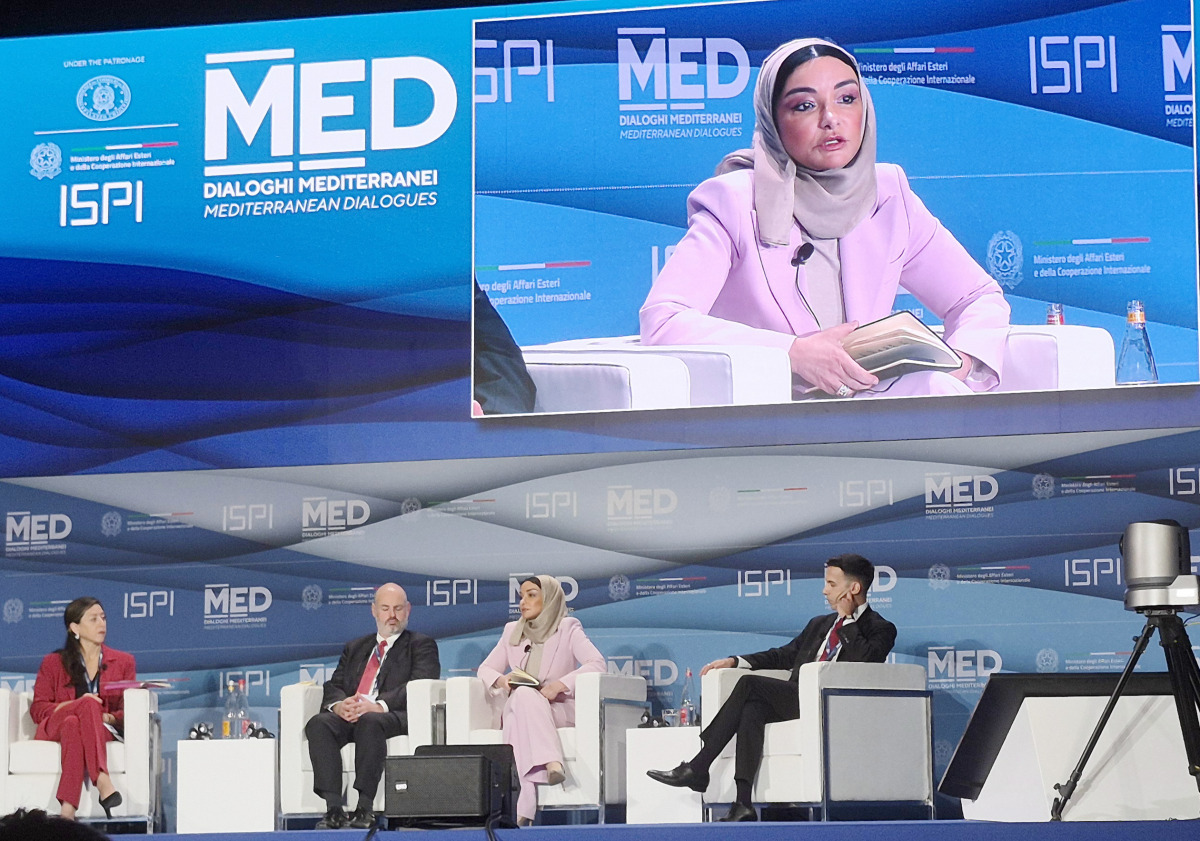
Panellists during a session.
Naples, Italy: Diplomacy, mutual security assurances and the establishment of an inclusive regional security architecture are essential to preventing renewed confrontation and achieving lasting stability in the Middle East, panellists said during a discussion titled “Reframing Security: Iran and the Future Regional Order” at the recently-held Mediterranean Dialogues (MED 2026) in Naples, Italy.
Chaired by Sanam Vakil, Director of the Middle East and North Africa Programme at Chatham House, the discussion examined Iran’s evolving strategic calculations, Gulf security priorities, the role of non-state actors and the implications of US domestic politics for regional developments.
Manal Radwan, Advisor and Special Envoy to the Saudi Minister of Foreign Affairs for Negotiations and Peace Efforts, stressed that the security and stability of the Gulf, including the Strait of Hormuz and Bab al-Mandab, constitute an international public good with far-reaching implications beyond the region.
She said Saudi Arabia was strengthening its defence capabilities, regional cooperation and international partnerships, particularly with the United States and European countries. However, she cautioned that security arrangements alone could not provide a sustainable solution. Radwan emphasised that a durable regional security architecture must accommodate the legitimate security concerns of all countries, including Iran, and create an environment of mutual reassurance.
“Our objective is not simply to ensure the security of Saudi Arabia or the Gulf states while excluding Iran,” she said, stressing the importance of preventing successive and potentially more destructive cycles of conflict.
She advocated a two-track approach that addresses immediate security threats while pursuing a long-term strategic vision for regional peace and stability.
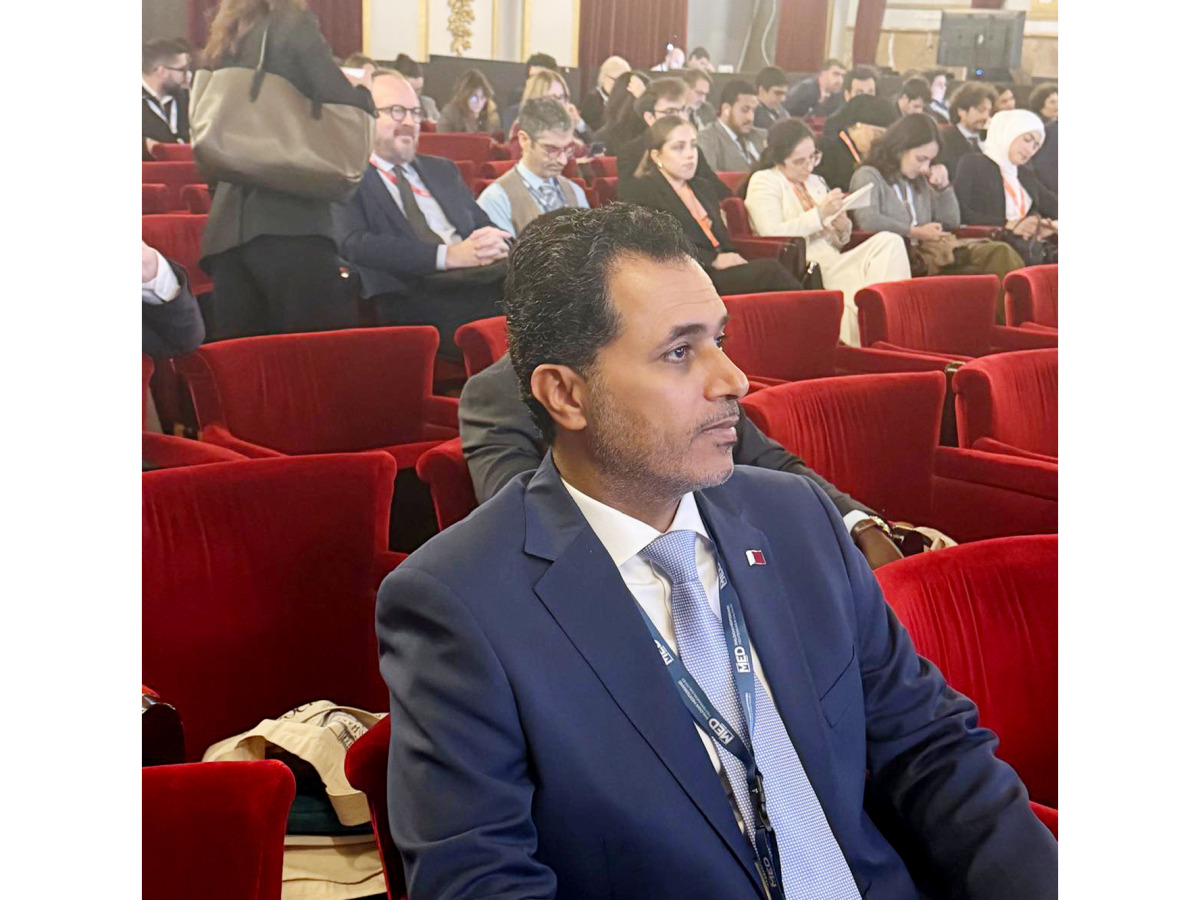 The Peninsula's Editor-in-Chief, Prof. Khalid Mubarak Al-Shafi attending a session at Mediterranean Dialogues in Naples, Italy.
Ali Vaez, Deputy Director of the Middle East Program at the International Crisis Group (ICG), warned that the prevailing state of neither war nor peace was unsustainable, given the mounting economic, military and strategic costs facing Tehran. He said Iranian policymakers could seek to break the current stalemate rather than endure prolonged economic pressure, military vulnerability and strategic isolation.
Vaez also warned of the possibility of renewed military operations by the United States and Israel, noting that regional mediation, particularly efforts involving Saudi Arabia, had helped contain escalation.
However, he cautioned against assuming that economic pressure alone would compel Tehran to fundamentally alter its strategic calculations, arguing that political systems could survive prolonged economic deterioration.
A significant development, he noted, was the apparent failure of Iran’s “forward defence” strategy, which relied on cultivating regional allies and proxies to establish strategic depth and shield the country from direct threats.
Rather than insulating Iran from confrontation, Vaez argued, the strategy had brought conflict directly to its territory, prompting a reassessment of Tehran’s security doctrine and greater emphasis on its conventional military and deterrence capabilities.
He described Iran’s emerging approach as a shift from strategic depth towards “strategic entanglement,” whereby Tehran seeks to link its security and economic interests with those of neighbouring countries.
While such interdependence could encourage regional countries to exercise greater agency in shaping a new security order, Vaez warned that Iran’s attempts to export insecurity could prove counterproductive, potentially prompting neighbouring states to form coalitions against it. He stressed that a window of opportunity for diplomacy remained open but warned that it might not last indefinitely.
Addressing prospects for a new regional security order, Radwan underscored the need to move beyond a security paradigm dominated by threats and confrontation towards one centred on stability, cooperation and confidence-building.
She rejected the notion that regional dialogue should serve as a mechanism for consolidating Iranian influence or translating perceived military gains into political dominance.
“There is no place for regional hegemony. Not by Iran, not by Israel, and not by any other state or actor,” she said.
Radwan also highlighted the complementary diplomatic roles played by Gulf Cooperation Council (GCC) member states, noting that differences in their foreign policy approaches did not necessarily undermine their collective security objectives.
She said GCC countries were increasingly coordinating their efforts through mediation, facilitation and diplomatic engagement, despite differences over certain regional issues.
The Saudi official stressed that any period of de-escalation should be used to build trust and lay the foundations for a comprehensive regional understanding rather than allowing temporary arrangements to become substitutes for long-term solutions.
On Iran-linked armed groups, Radwan called for a more nuanced political and security approach that recognises differences in their motivations, local circumstances and relationships with external powers.
She noted that while some groups operate as proxies, others exercise a degree of autonomy, benefiting from regional instability, weak accountability and prevailing political, economic and social conditions.
Addressing the threats posed by these actors, she said, required understanding both the domestic circumstances that enabled their emergence and the external political, military and financial support they received. She cautioned against adopting a uniform policy towards all non-state actors or addressing their activities exclusively through a security lens.
Jonathan Panikoff, Senior Director at the Atlantic Council, examined the implications of US domestic politics for Washington’s military and diplomatic engagement in the Middle East.
He argued that President Donald Trump retained considerable executive authority over military operations, force deployments and diplomatic initiatives, even in the face of potential congressional opposition.
While Congress could exercise influence through budgetary allocations, military funding and mechanisms such as the War Powers Resolution, Panikoff said these measures faced practical limitations, particularly in the short term.
He noted that congressional and judicial efforts to constrain presidential decisions could take considerable time, leaving the administration with substantial operational flexibility.
Panikoff also highlighted uncertainty surrounding government funding negotiations and the extent to which congressional opposition could influence the administration’s regional policies.
Turning to Yemen, Radwan reiterated Saudi Arabia’s position that the conflict was fundamentally an internal dispute among Yemeni parties rather than a war between Yemen and the Kingdom.
She acknowledged that the conflict had created opportunities for Iranian interference and pressure on Saudi Arabia but stressed that resolving it required addressing its underlying domestic political and economic causes.
She called for a comprehensive political and economic settlement involving the Houthis, the internationally recognised government and other Yemeni political and social groups. Noting that the Houthis possessed considerable leverage, she urged the group to engage constructively in negotiations and take responsibility for advancing the peace process.
The discussion highlighted the limitations of military deterrence, economic coercion and short-term crisis management in achieving lasting regional stability. Panellists underscored the urgency of diplomatic engagement amid the risk of renewed confrontation, with particular emphasis on regional ownership, mutual security assurances and the need to prevent recurring cycles of conflict.