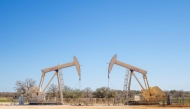
Oil prices have gained recently helped by Opec’s high compliance with oil-output curbs but shale oil price will determine further course for the prices in 2017.
Oil prices are expected to remain in $55-60 range in the current year as the US shale oil production is likely to cap prices to move beyond the range, said QNB in its Economic Commentary yesterday.
“Having been in steady decline since April 2015, US production has increased since November 2016. Therefore, we expect oil prices to remain bound in the $55-60 range, on average, during 2017 as US shale oil production puts a lid on prices,” said QNB.
Oil markets have been in waiting mode during the early part of this year to see how effective Opec’s November agreement to cut production in 2017 would actually be. The first round of January data has now come in and it suggests that compliance with the agreement is high, lending support to prices. With this new data in hand, we have refreshed our outlook for oil prices.
“With excess supply in global markets now expected to clear in 2017, the key determinant of prices is likely to shift to the costs of the marginal producer, in this case US shale companies, which are currently estimated to be around $55-60,” added the report.
The compliance of producers with the Opec agreement will be key to determining the future trajectory of oil prices. Opec has cut production by 1.1m b/d compared with a target of 1.2m (93 percent compliance), with 0.6m of these cuts coming from Saudi Arabia. Non-Opec is expected to achieve production cuts of around 0.3m b/d in early 2017, compared with a target of 0.6m.
"To calculate the balance of supply and demand in global oil markets in 2017, we assume 100 percent compliance with Opec production targets during the first half of 2017," said the report. "We assume that the agreement will not be extended in June and production will revert to pre-agreement levels during the second half of the year," it added.
This implies a 0.3m b/d increase in Opec production on average over 2017 compared with 2016. Based on IEA data, the global oil market was oversupplied by 0.4m b/d on average in 2016. Demand is expected to grow by 1.4m b/d in 2017, which would totally wipe out the surplus.
However, this will be partly offset by increases in supply from Opec, US shale and other non- Opec producers. The net effect would be a shift from an oversupplied oil market to one that is undersupplied by 0.25m b/d in 2017. Taken in isolation, the clearing of the oil market should be sufficient to raise oil prices above the $60/b level.
However, higher prices are likely to bring marginal producers back into the market, leading to higher supply and capping price increases. The average breakeven price for US shale is estimated at around $55/b currently.
US shale breakeven prices have fallen from $80-90 a few years ago to around $55-60 currently. The costs of production were brought down by targeting low cost fields, productivity gains as technological advances allowed more oil to be extracted from each well as well as by falling costs for labour and other oil services thanks to excess capacity in the industry.