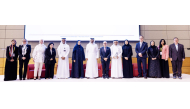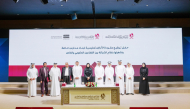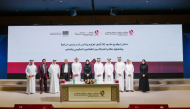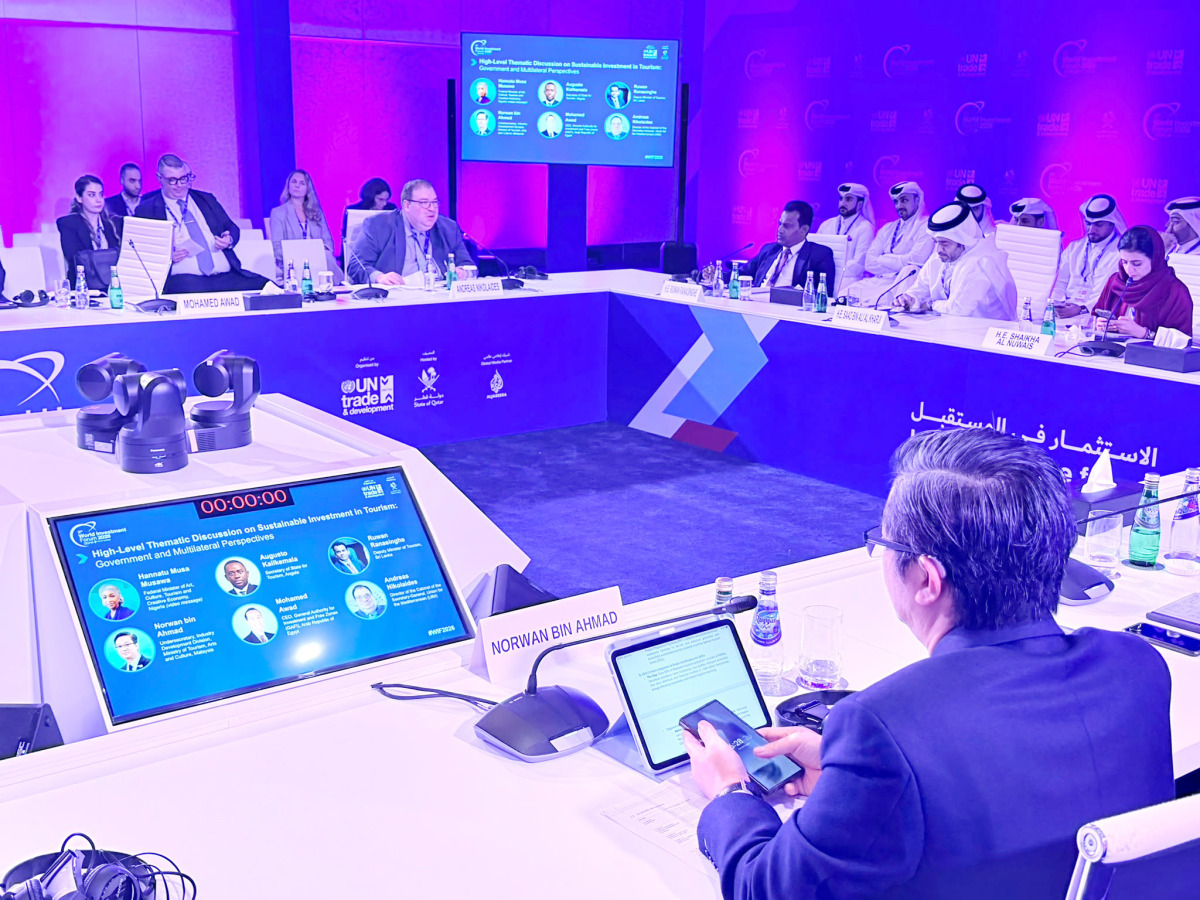
Participants during the session on Sustainable Investment in Tourism at the World Investment Forum in Doha yesterday.
Doha: Chairman of Qatar Tourism and Chair of the Board of Directors of Visit Qatar H E Saad bin Ali Al Kharji has underscored the importance of protecting jobs, supporting private-sector businesses and restoring visitor confidence as Qatar works to strengthen its tourism industry’s resilience amid regional geopolitical challenges.
Speaking during the Sustainable Investment in Tourism session at the UNCTAD World Investment Forum 2026 in Doha yesterday, Al Kharji said tourism investment must go beyond infrastructure development and visitor numbers to deliver lasting economic benefits, create employment opportunities and strengthen communities.
In attendance at the session were Secretary-General, UN Tourism H E Shaikha Al Nuwais, Minister of Tourism and Antiquities, Arab Republic of Egypt H E Sherif Fathi Attia, Deputy Minister of Tourism, Sri Lanka H E Prof. Ruwan Ranasinghe, Secretary of State for Tourism, Republic of Angola Dr. Augusto Kalikemala, and Undersecretary, Industry Development Division, Ministry of Tourism, Arts and Culture, Malaysia Dr. Norwan bin Ahmad, among others.
Al Kharji noted that geopolitical developments can significantly disrupt international travel, weaken visitor confidence and directly affect hotels, restaurants and other businesses dependent on tourism.
“What matters is how we respond to these challenges and how quickly we can get the sector moving again,” Al Kharji said. He explained that Qatar has been implementing practical measures to rebuild confidence and stimulate tourism demand, including intensified international promotional campaigns, stronger partnerships with airlines and travel trade operators, and the introduction of major events and new visitor experiences.
“Our focus is on keeping Qatar busy, creating new reasons to visit and restoring momentum across the sector,” he said. Highlighting the challenges confronting tourism businesses following regional developments since March, Al Kharji said protecting employment had become a major priority.
He stressed that retaining experienced hospitality workers was essential to ensuring that businesses could recover quickly once conditions improved. “The biggest challenge was for me to keep businesses running and keep them going,” he said, explaining that encouraging private-sector employers to retain their workforce had been particularly difficult. Al Kharji warned that dismissing trained and highly skilled employees during periods of uncertainty could undermine the industry’s ability to return to normal operations. He emphasised that sustainable tourism involves building a sector capable of withstanding disruptions, recovering from setbacks and maintaining long-term growth.
Referring to Qatar’s economic diversification ambitions, Al Kharji highlighted the enduring legacy of the FIFA World Cup Qatar 2022, describing the tournament as an example of how investments in major international events can generate benefits extending far beyond the event itself. He said Qatar’s preparations for the tournament involved substantial investments in infrastructure, hospitality, transportation and services, creating business opportunities and employment across multiple sectors.
However, he identified human capital development as one of the tournament’s most valuable achievements.
The skills, expertise and organisational capabilities developed during the World Cup, he explained, continue to support Qatar’s ability to host international events and deliver high-quality tourism experiences.
Al Kharji said the country’s enhanced infrastructure, experienced workforce and improved service capabilities have strengthened its position as an international tourism destination.
He also called for tourism investment to generate wider economic benefits by supporting small and medium-sized enterprises, entrepreneurs, education, professional training and technological innovation. UN Tourism Secretary-General H E Shaikha Al Nuwais praised Qatar’s remarkable tourism growth. She highlighted world-class infrastructure, cultural festivals, and sustainable initiatives that position the nation as a leading global destination.