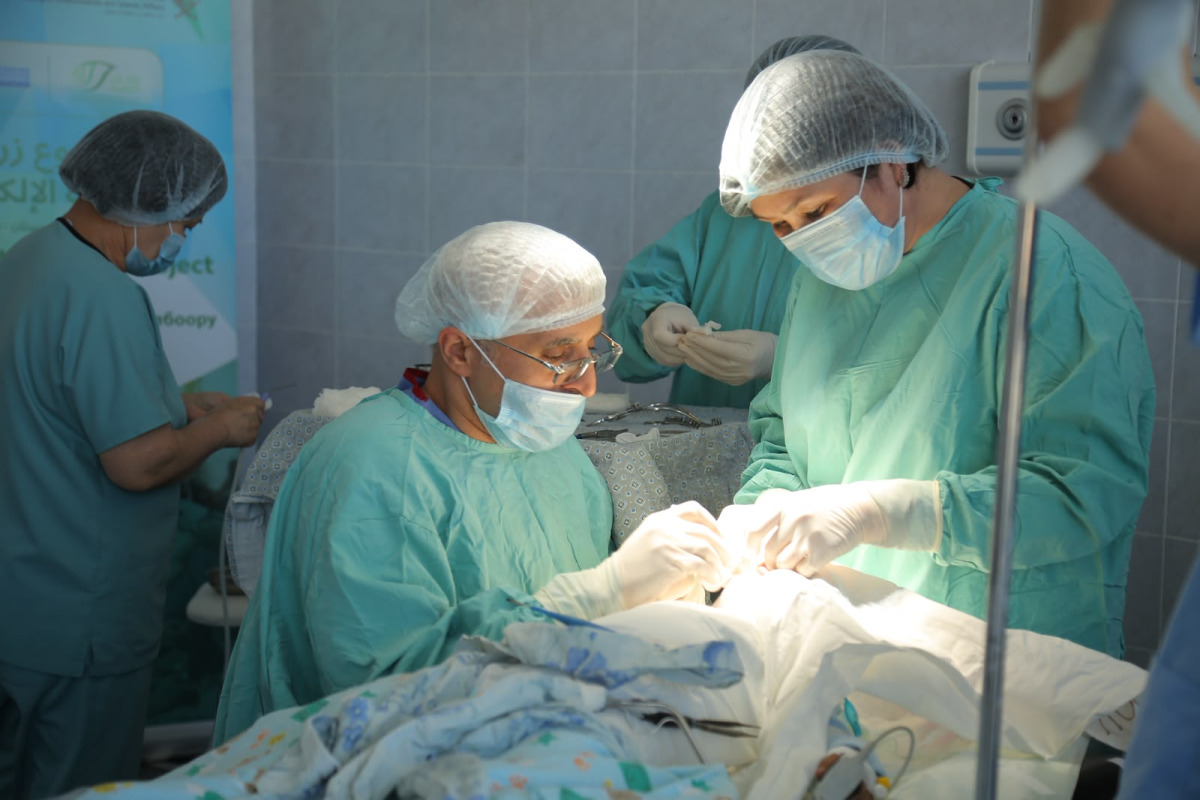
Qatari medical team performing a cochlear implant surgery on a patient in Kyrgyzstan.
DOHA: Qatar’s cochlear implant programme has surpassed 300 cases since its launch, following a recent medical mission to Kyrgyzstan that provided treatment to 50 children with hearing impairments.
The Qatari delegation, which concluded its visit to the Central Asian country after a medical mission from November 6 to 10, 2026, performed 30 cochlear implant surgeries and provided 20 hearing aids to children, as part of ongoing efforts to improve access to specialised healthcare for children with hearing loss.
The programme is supported by the Healthcare Endowment Fund of the General Directorate of Endowments at the Ministry of Awqaf and Islamic Affairs, in cooperation with Hamad Medical Corporation (HMC). It aims to provide specialised treatment and medical devices to children in need, while strengthening Qatar’s humanitarian and healthcare cooperation with Kyrgyzstan.
Upon arriving in the capital, Bishkek, the Qatari medical team coordinated with local authorities, conducted the necessary examinations and assessments of shortlisted children, and received cochlear implant devices and medical equipment deposited at the Qatari Embassy ahead of the surgeries.
The medical mission carried out 30 cochlear implant operations after completing the required medical evaluations. The team also followed up on the children’s health conditions after surgery to ensure their recovery.
During the visit, the delegation met Ambassador of Qatar to Kyrgyzstan H E Ali bin Jaber Al Marri to review the project’s progress and achievements, particularly the milestone of exceeding 300 cochlear implant cases since the programme began.
The delegation members expressed appreciation for the continued support of the Qatari Embassy and its role in facilitating the procedures and logistical arrangements necessary for implementing the programme.
The team also visited the Children’s Hospital in Bishkek and met its director, Dr Aina Baibayevna, to discuss the project’s progress and follow up on the conditions of children who had undergone surgery.