Telecommunications companies around the globe are having a challenging time dealing with disruption from the constant evolution of new technology.
Understanding how the opportunities can be used to enhance their business and service offerings and trying to avoid being left behind competitors creates cause for concern. And according to the telecommunications executives responding to a new KPMG International survey, a large majority (70 percent) fear their businesses are not equipped for the new, disruptive world.
The survey found that just 11 percent of respondents feel strongly that their organisation has a clear strategy and mission for disruptive technology and of those respondents reporting a negative impact from disruption, more than half (54 percent) believe that their company only invests in proven technologies leaving them ‘behind the curve’.
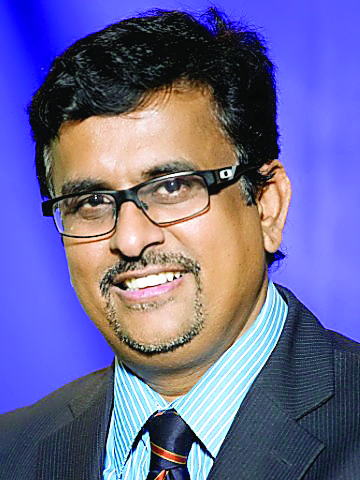
A further 36 percent claim they ‘saw the technology trend too late,’ and 69 percent feel disruptive technologies are bringing in new competitors from outside the industry. According to Gopal Balasubramaniam (pictured), Partner and Head of Technology, Media and Telecommunications at KPMG in Qatar, local telecoms operators need to ‘stay ahead of the game’ to prepare themselves for the potential impact of disruption:
“Telecom companies in Qatar and elsewhere are accustomed to frequent change and – but the accelerated speed of disruption is something they haven’t experienced before. However, the majority of telecommunications executives we surveyed from around the world are excited about the potential for disruptive technologies to enhance their business models and operations, with 58 percent of those who have adopted one or more reporting a positive impact,” he said.
The survey found that telecom companies are using disruptive technologies to improve how they serve customers and support operational efficiency. More than 70 percent say data and analytics (D&A), mobile, cloud, social media, the internet of things (IoT), marketing platforms, digital payments, and artificial intelligence (AI) are being used and changing how they serve their customers.
“Despite having billing information on millions of customers, many telecommunications companies are not using it to the fullest advantage to offer a heightened experience,” comments Alex Holt, Head of Technology, Media & Telecommunications (TMT) KPMG in the UK. “Indeed, D&A plays a vital part in understanding customer behavior, giving insights on how to better serve customers, which in turn should increase customer loyalty and reduce churn.”
The survey found that IoT (54 percent) and wearables (53 percent) are the top two technologies for supporting customers after their purchase thus enabling their companies to keep in touch with their customers every move—to predict and react to their needs. IOT and wearables were also seen as disruptive technologies with the potential to make telecommunications companies more productive, and drive greater quality, along with virtual/augmented reality – with 44 percent of respondents citing this innovation.
With numerous disruptive technologies changing the telecom environment, having the right talent in the organization is critical. The traditional organizational model in telecom consists of large teams of customer-facing staff and network engineers. According to the survey, 43 percent of telecom leaders claim their organization has the staffing and skills in place to contend with the effects of disruptive technologies. In addition, 46 percent say their company plans to hire new talent specifically to help implement these technologies.