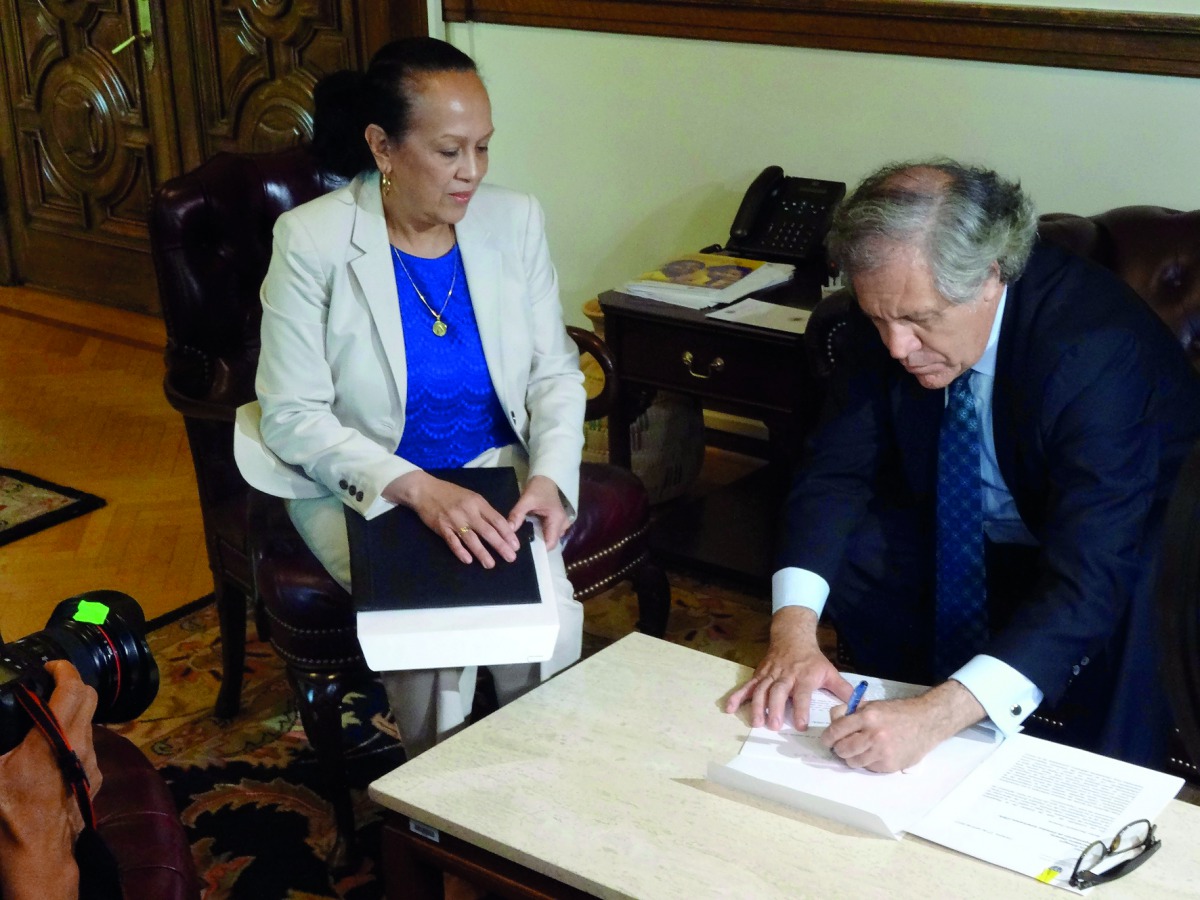
Carmen Velasquez (left), Interim Ambassador of Venezuela at the Organisation of American States, submits a letter to OAS Secretary-General Luis Almagro, formally starting the process to quit the 34-member-countries regional body.
Caracas: Venezuela formally notified the Organisation of American States yesterday of its intention to leave the regional body amid sometimes violent protests at home and international calls for its embattled government to hold delayed elections and release prisoners.
Venezuelan Interim Ambassador Carmen Velasquez submitted a letter announcing the move in Washington to OAS Secretary General Luis Almagro, a strong critic of socialist President Nicolas Maduro. The notice begins a two-year exit process from the Western Hemisphere’s largest diplomatic body, which had become a forum for its neighbours to exert pressure on Venezuela.
“This is a historic moment that marks a new independence for Venezuela and the region,” said Velasquez, adding Venezuela would be first country to leave the Washington-based bloc this way. “We are not going to be participating in any OAS activities.”
The decision to leave the OAS comes amid almost daily clashes between security forces and anti-government protesters that have left at least 28 people dead and hundreds injured.
Yesterday, hundreds marched to a military prison outside Caracas to demand the release of opposition leader Leopoldo Lopez and other jailed activists they consider political prisoners.
The march was part of an intensifying campaign by the opposition to force Maduro from office. More than 1,300 people have been arrested in almost four weeks of street clashes.
Marchers wound through side streets on the way to the prison, shouting “Maduro out!” and waving Venezuelan flags. Light armoured vehicles and national guardsmen blocked access to Ramo Verde military prison where Lopez is serving a nearly 14-year sentence for inciting violence during a previous round of anti-government unrest in 2014. With access blocked, the march ended 2.5 miles from the prison.
Protesters also marched to prisons in other cities where they say 178 people are being held on political charges. Lopez’s wife Lilian Tintori was at the front of a group of lawmakers and opposition activists carrying a large Venezuelan flag making their way to the prison.
“For Maduro, not being on his side is a crime, thinking differently is a crime,” she said. “They forgot what democracy is.”
Venezuela’s decision to leave the OAS comes after a contentious meeting at group’s headquarters in which its permanent council voted in favour of holding a special session to evaluate Venezuela’s crisis, adding to calls for Maduro to schedule delayed elections and free detained political activists.
Tensions have been rising between Venezuela and a group of OAS members since Almagro issued a 75-page report in March accusing Maduro’s government of violating human rights and standards of democracy.
Venezuela denies the accusations, accusing regional body of being a tool of the US.
At a news conference at his country’s consulate in New York yesterday, Samuel Moncada, Venezuela’s deputy minister of foreign affairs for North America, said his country is pulling out of OAS because the group it is now a forum for “coercion” instead of cooperation.