
By Satish Kanady
DOHA: Qatar’s ‘systematically important’ banks are required to maintain additional capital charge from next year. Effective from 2016, the domestic systemically important banks (D-SIBS) will have to maintain additional capital charge in a phased manner with full implementation by January 2019.
‘Systemically important’ banks are those banks identified by regulators, whose failure might trigger a credit crisis.
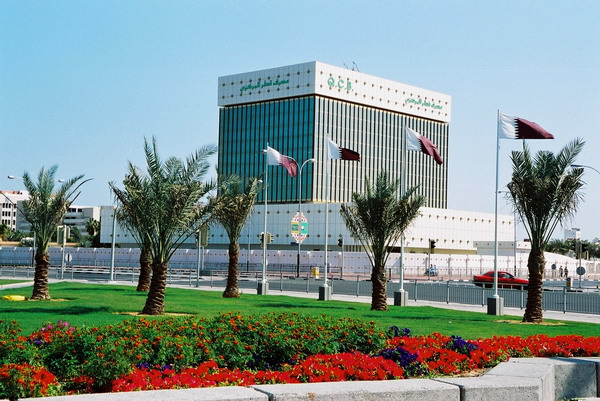
According to Qatar Central Bank (QCB) the Basel III Capital Adequacy guidelines were issued to all Qatari banks in January 2014, with the minimum requirements for capital adequacy and capital conservation buffer. In July 2014, the central bank advised the local banks on the framework of D-SIBS, which have high loss absorption capital requirement ranging from 0.5 percent to 2.5 percent.
The central bank, as part of it’s strategic plan for financial sector regulation, had issued a Liquidity Coverage Ratio (LCR) circular to banks in January 2014 . This was amended in May 2014 to incorporate the changes effected by the Basel Committee on Banking Supervision (BCBS). A separate circular on Leverage Ratio was also issued in July 2014, QCB noted in its latest edition of financial stability review .
The central bank observed that the local banks made good progress on developing the financial markets and related infrastructure to meet international standards and best practices in order to provide a conducive and investor friendly environment. Specifically, major steps have been taken to develop deep and liquid debt markets through regular issuance of Treasury bills as well as government securities.
This would lead to the development of a risk-free yield curve that will help in the efficient pricing of financial instruments in the market as well as help banks manage their liquidity.
In particular, it would help in the development of a corporate debt market in Qatar, which would be an important platform for the corporate sector in mobilising resources for investment in the non-hydrocarbon sector. Moreover, the three regulatory agencies are working together to harmonise and strengthen regulatory oversight and safeguard consumer and investor protection.
According to the QCB, Qatari banking system has remained well capitalised and liquid in 2014. The banks’ Tier 1 capital exceeded 15 percent of risk-weighted assets and non-performing loans remained below 2 percent during the year. The banks were highly profitable ?with a return on assets at 2 percent. Liquidity buffers were strong. The aggregate loan-to-deposit ratio remained at about 1 percent over the year? with the foreign funding of commercial banks continuing to fall modestly as a share of total liabilities. Cross-border assets have grown to around 20 percent of banks’ assets.
The Peninsula