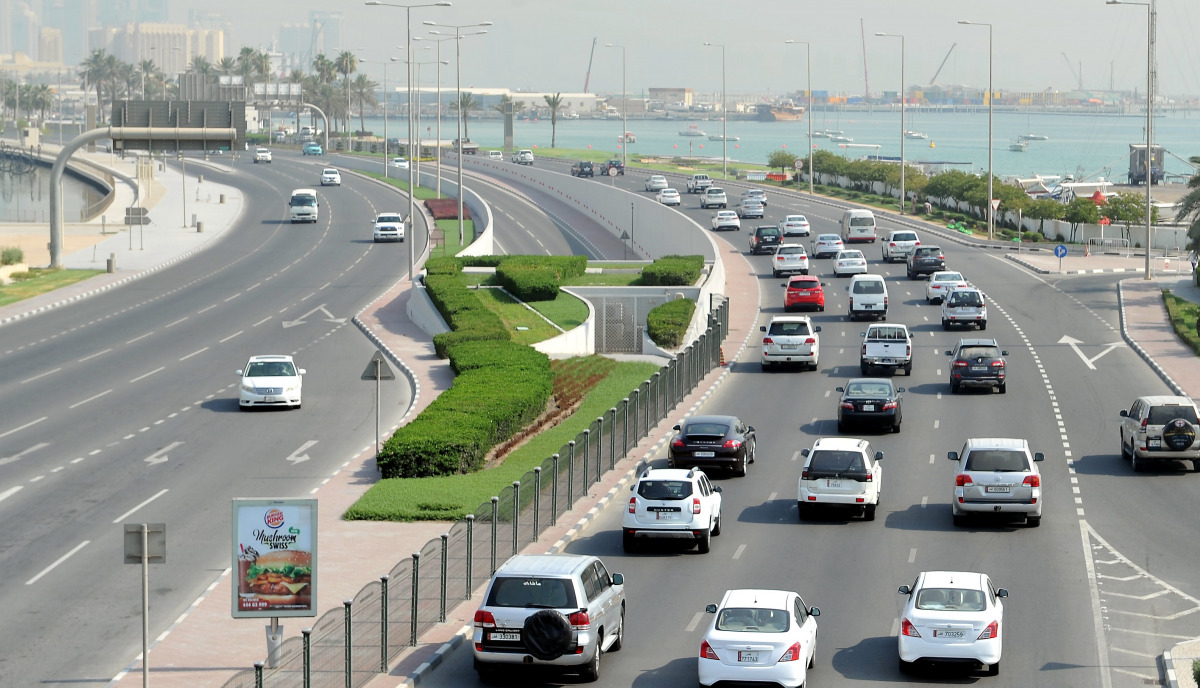
File photo used for representation only.
DOHA: Qatar has significantly expanded its transport sector over the last decade with a focus on long-term strategies and sustainability. The country has invested in developing the roads, rail networks and public transport system in line with Qatar National Vision 2030.
The Ministry of Transport (MoT) is committed to achieving the goals of its strategy through the development of an integrated and sustainable transport system that adopts the latest smart systems and technologies. This contributes to strengthening the transport infrastructure and serving various economic, service and environmental sectors, and consolidating Qatar’s role as an effective link in the regional and global economies.
MoT Strategy 2025-2030 is based on a clear vision of an integrated, secure, resilient, and sustainable transport ecosystem. The mission is to drive the development of the transport ecosystem towards high logistic efficiency, supporting the pillars of Qatar National Vision, the Ministry stated in a post on its social media handle. The Ministry’s strategy features an ambitious roadmap focused on developing the transportation and mobility industry in Qatar and enhancing its role in economic growth, sustainability, and innovation.
The strategy stems from the Qatar National Vision 2030 and is aligned with the MOT’s endeavours to achieve the goals of the Third National Development Strategy by developing a world-class infrastructure that places the country in an advanced position globally in terms of logistics performance, digital transformation, and smart mobility innovation.
It includes 125 projects stemming from 42 initiatives, with active participation from the private sector at a rate of up to 40 percent, which enhances economic diversification, deepens development partnerships and contributes to raising the efficiency of implementing future projects.
It focuses on improving the public transport system through 17 quality initiatives that contribute to providing reliable and environmentally friendly services that serve different segments of society and give priority to innovation and building national capabilities through specialised training programmes and technology development projects.
The post further highlighted how Qatar has developed a world-class transport infrastructure, including land, and maritime transport systems.
Land transport has become a key enabler of the Qatari economy and a cornerstone of its growth, and the land transport sector continues its efforts to develop a state-of-the-art transport network.
The land transport sector saw a robust growth in the first nine months of this year as it completed 9,256 transactions through Land Transport Affairs. The highest levels transactions were registered during the third quarter (July-September) with a total of 3,429.
This was followed by second quarter (April-June) registering 2,992 transactions and first quarter (January-March) which recorded 2,835 transactions.
Meanwhile, the maritime transport sector of Qatar recorded 3,321 transactions in the third quarter of this year, 5,042 transactions in the second quarter and 3,356 transactions in the first quarter through Maritime Transport Affairs.
The maritime transport sector is committed to developing and modernising the sector in line with the Ministry’s strategic plans aiming at ensuring a safe maritime navigation that meets all safety requirements that keep pace with international maritime developments.
The Ministry continues its efforts to develop the ports sector, maintain its infrastructure, and broaden the logistics sector within, as well as the best use of existing ports. As part of its efforts to accelerate digital transformation and enhance accessibility to its services, the Ministry’s mobile application ‘Darb’ for smartphones and tablets was launched.
This unified platform allows users to easily complete their transactions. Currently, the application offers a range of digital services related to maritime and land transport, with plans to gradually expand its services to include more.
Recently, MoT announced the high-speed electric rail project for the transportation of passengers between Qatar and Saudi Arabia. The high-speed train will span 785 kilometers, linking the two capital cities, Doha and Riyadh, while spreading across several regions like Al-Hofuf and Dammam, and linking Hamad International Airport with King Salman International Airport.