By Mohammad Shoeb
DOHA: Banks and financial institutions need to be aware and cautious about the heightened risks against the backdrop of the current economic and financial situations. But at the same time they need not to “over react recklessly”, said a Professor at Harvard Business School (HBS) here yesterday.
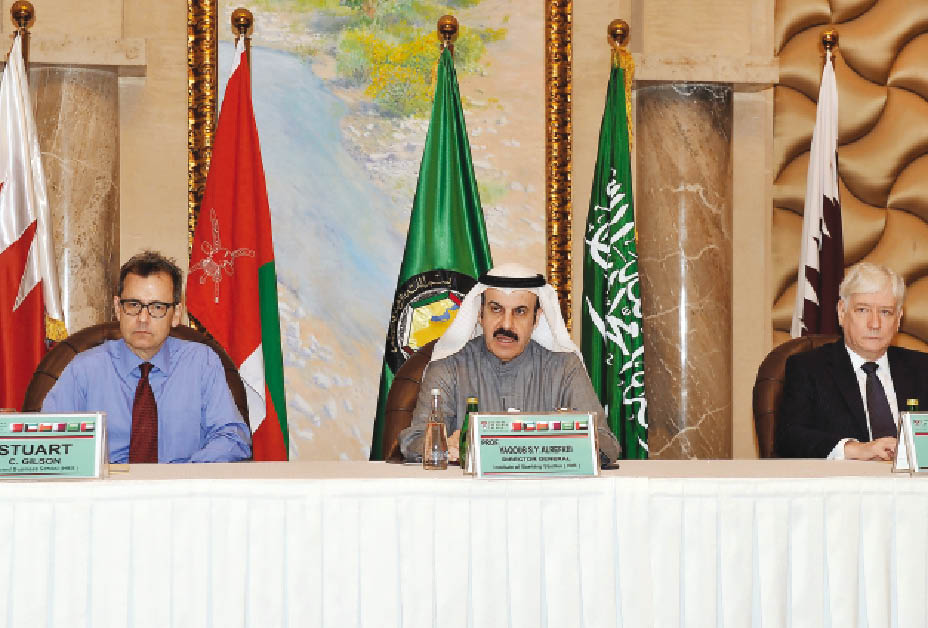
“Fundamental goals of banks should remain the same. We should take comfort and learn lessons from history because this is not the first time we are facing such a situation when the global economy has been put under this kind of pressure,” said Stuart C Gilson, Steven Fenster Professor of Business Administration at HBS.
Prof Gilson, who is here to lecture at a HBS training programme for banking and financial executives from GCC countries, however, noted: “We live in a period of great uncertainty. The world is experiencing a challenge to investors’ confidence with falling commodity prices, including the fall of oil prices at an unprecedented level. No one knows what is going to happened to oil prices in the near future.”
He said that the current crisis, combined with the unresolved issues in China such as declining industrial production, have caused enormous impact on economies around the world. Gilson was addressing the members of the media with Professor Yaqoub S Y Alrefaei, Director General of the Kuwait-based Institute of Banking Studies (IBS) , which is working with HBS for the seventh year in a row to host the executive education programme. The programme titled: “Leading Strategy Execution in Financial Services”, has returned to Qatar (after 2012) for the second time, and will conclud on February 4.
Alrefaei said that the programme is one of the strategic developmental projects organised by the institute.
“The programme aims to upgrade the skills of the Kuwait and GCC national workforce, of which executives comprise the key component,” said Alrefaei.
The programme was conducted for the first time in 2010 as an exclusive event for the Central Bank of Kuwait and the Kuwaiti banks. After the tremendous success of that first programme and with the Harvard Business School showing interest in taking it to the GCC level, the programme continued to be run on an annual basis since then, alternately in one of the GCC states.
The number of participants in the programme over the past six years has totaled 259, whereas 52 participants are enrolled for this year’s programne.
Prof Alrefaei said: “Harvard Business School is very selective in conducting custom programmes, especially those beyond its campus in Boston, USA. The school’s desire to continue to work with IBS, Kuwait on these projects is an indication of the success of this collaboration.”
The Peninsula