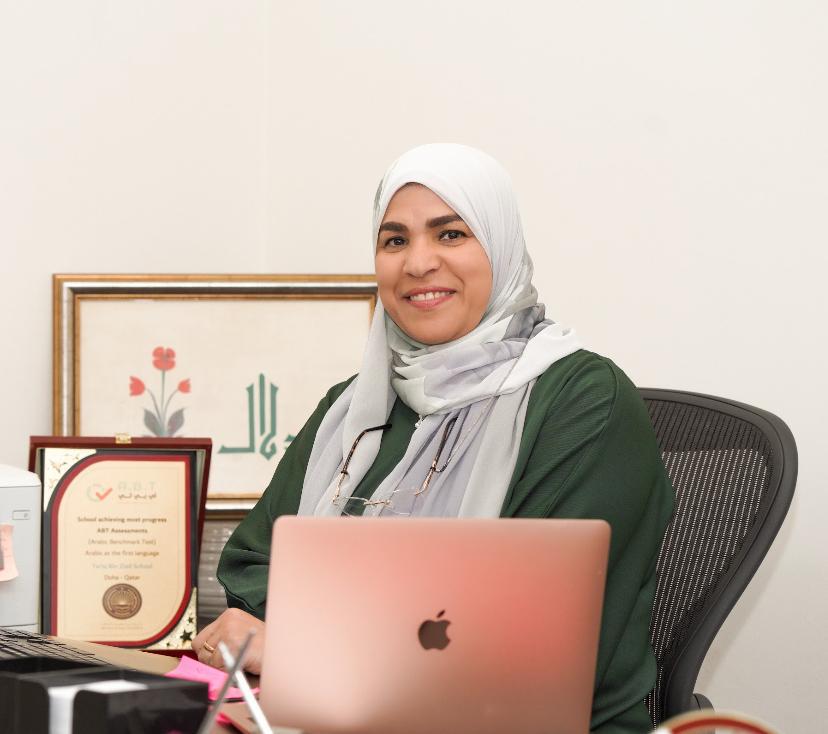
Principal at Tariq Bin Ziad Primary School Dalal Ali Ahmed
Doha, Qatar: With several schools under Qatar Foundation (QF) resuming in-person classes, enhanced safety measures and emergency preparedness drills are being prioritised to ensure the wellbeing of students and staff amid the current regional situation.
Qatar Foundation continues to reinforce its commitment to safety by ensuring that preparedness measures remain consistent, structured, and aligned with national guidance.
As part of these efforts, a comprehensive safety drill was conducted yesterday at Tariq Bin Ziad Primary School, which has 741 students and 119 staff members. The exercise focused on reinforcing key procedures to be followed in emergencies, particularly shelter-in-place protocols alongside evacuation practices.
Speaking to The Peninsula, Principal at Tariq Bin Ziad Primary School Dalal Ali Ahmed (pictured) highlighted the importance of aligning all decisions with official guidance.
“Qatar Foundation is working closely with the government, and we take all our guidance from them. In this situation, we shouldn’t work individually, we should work collaboratively in conjunction with government instructions,” she said, adding that the transitions between remote and in-person learning have consistently followed government directives.
Ahmed explained that strict protocols are in place before reopening school campuses. “We ensure that secure protocols are established. We received clear instructions from QF regarding shelter-in-place procedures and evacuation. All leadership and teachers are trained, and parents are clearly informed about these measures.”
Describing the recent drill, she said students demonstrated strong awareness and composure. “Children showed understanding, and they were calm and safe. This reflects the awareness we are building among them,” she said.
The school has implemented a range of concrete safety measures. Classrooms display clear visual guides outlining steps for shelter-in-place, while teachers are equipped with student lists and a colour-coded system to track attendance during emergencies.
“A green card indicates all students are present, while a red card is raised if any student is missing,” Ahmed explained. First aid kits are also readily available, and staff are trained on assembly procedures to ensure student safety. Ahmed emphasised that safety preparedness is part of the school’s culture even in normal conditions. Emergency drills are conducted regularly and are embedded into the academic calendar. “From the beginning of the year, students are introduced to safety drills.
Teachers explain procedures in simple ways suitable for primary and early years students, and they practice regularly,” she said. “For fire drills, we practice twice a year, with an additional random drill annually. This year, we introduced shelter-in-place drills.” She added that students are taught to understand the broader purpose of such exercises.
“It’s not only about one type of emergency. It could be bad weather, fire, or any unexpected situation. We want them to understand why these practices are important.” Parents are also kept informed through clear communication about safety protocols and procedures. “This gives them confidence that their children are in safe hands. The school has a plan in place for any emergency, and that is very important,” Ahmed said.