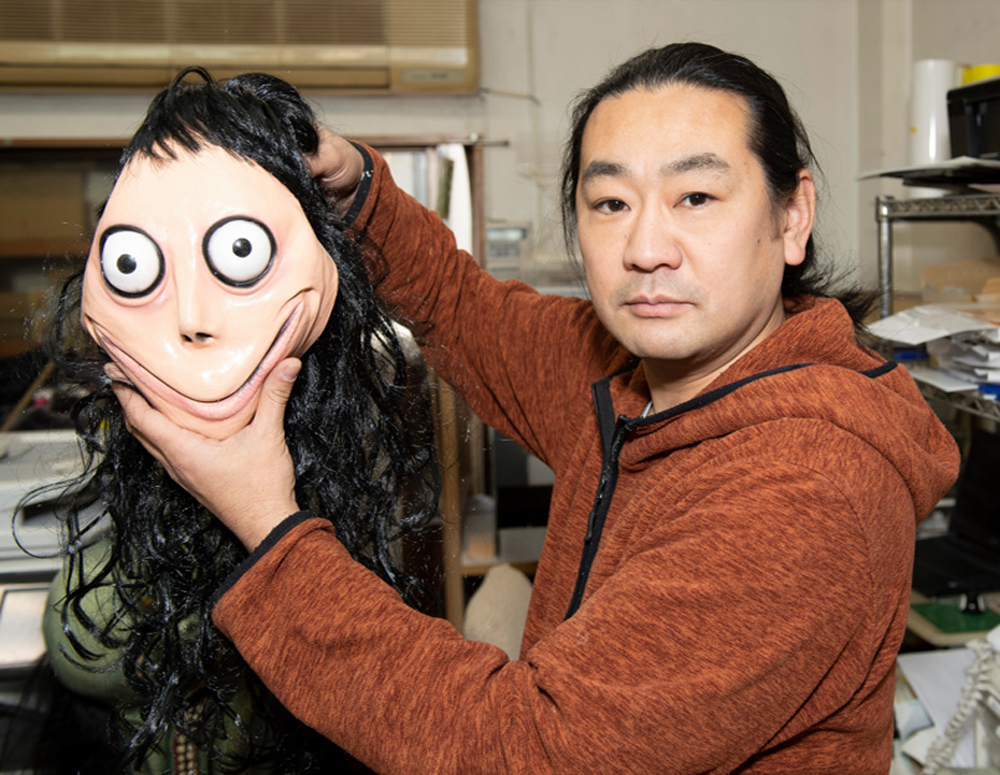
Tokyo: The Japanese artist behind the images that sparked the recent viral "Momo challenge" hoax told AFP Monday he destroyed the creepy doll long ago and never meant to harm anyone.
The scary image with goggly eyes and a pained expression was based on a Japanese ghost called "ubume" -- of a woman who dies during childbirth, explained Keisuke Aiso, head of Tokyo-based firm LINK FACTORY, which makes props for TV dramas.
The silicon-based sculpture, which stands about one metre high, was first shown at a ghost-themed exhibition in Tokyo's swanky Ginza district in 2016 but attracted little attention at the time.
It was one of many ghost-themed sculptures in Aiso's repertoire and the artist said: "It was meant to scare people, yes, but it wasn't meant to harm anyone."
Aiso, 43, destroyed the sculpture last year because it began to deteriorate. "That was nothing to do with the recent case," he stressed.
The terrifying image has been at the centre of a viral hoax, as reports surfaced that children were being induced by "Momo" into dangerous tasks and even self-harm and suicide.
However, there is no evidence this is true and the myth seems to have been propagated mainly by concerned parents via social media.
Aiso appeared bemused by the reports and told AFP: "I'd be happy if such a challenge never existed."
The latest parental panic on social media - over a purported challenge for kids to complete harmful tasks - elevates the importance of establishing an open dialogue with children and taking advantage of online parental controls.
Warnings about the "Momo challenge" swept Facebook and other social media in recent days, as parents worried about purported videos that encourage children to hurt themselves or do other harmful tasks such as turning on stoves without telling their parents. The parental warnings were accompanied by a disturbing image of a grinning creature with matted hair and bulging eyes.
But the challenge is believed to be a hoax. It's unclear how many videos exist or to what extent they have circulated, among children or elsewhere. Some of the videos might have been made in response to media attention surrounding the challenge.