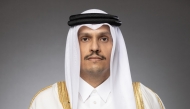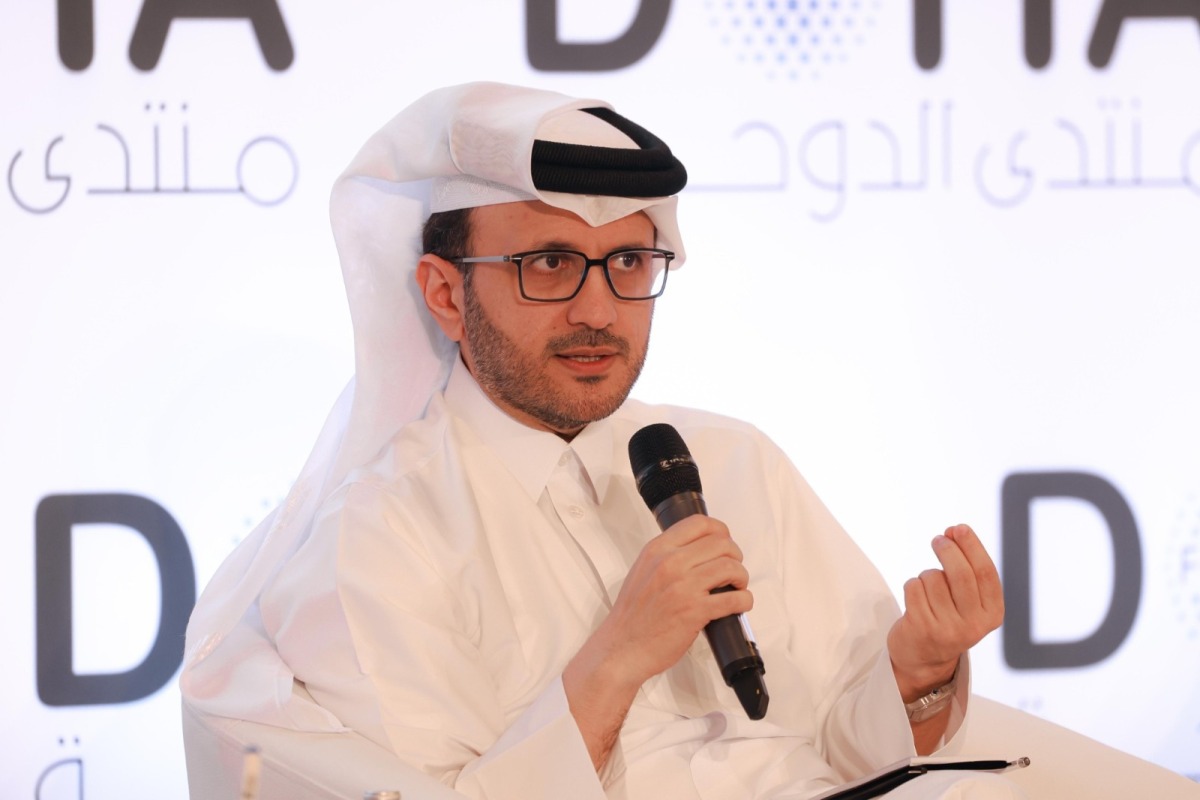
Doha: Advisor to the Prime Minister and Spokesperson for the Ministry of Foreign Affairs (MOFA) Dr. Majed Mohammed Al Ansari emphasized the importance of enhancing cooperation between the Gulf countries and the European Union (EU) politically, economically, and in terms of security, noting that such cooperation constitutes a fundamental pillar for achieving regional and global stability.
This came during a panel discussion titled "Gulf-EU Relations in the Age of Strategic Isolation", held on the sidelines of the first day of the Doha Forum 2025.
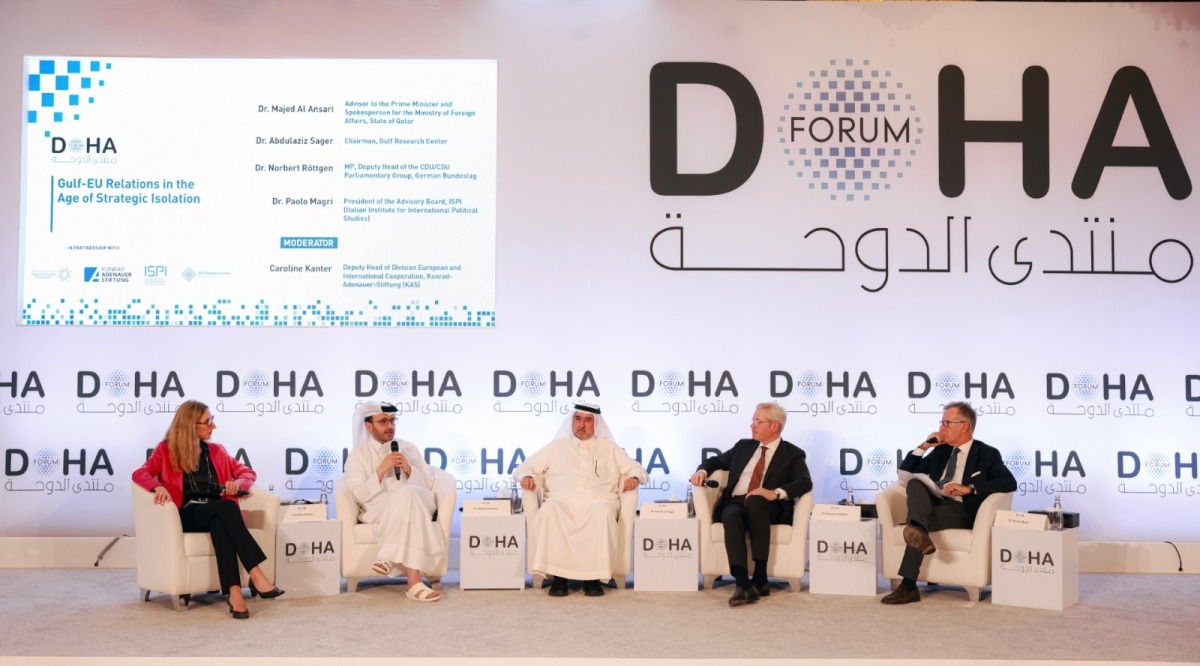
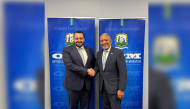
Alongside Dr. Al Ansari, the panel featured: HE Member of Parliament, Deputy Head of the CDU/CSU Parliamentary Group at the German Bundestag Dr. Norbert Rottgen; President of the Advisory Board of the Italian Institute for International Political Studies (ISPI) Dr. Paolo Magri; as well as Founder and Chairman of the Gulf Research Center Dr. Abdulaziz Sager.
The discussion was moderated by Deputy Head of the European and International Cooperation Division at Konrad-Adenauer-Stiftung (KAS) Caroline Kanter.
Dr. Al Ansari noted that recent global geopolitical shifts, including the US announcement of its National Security Strategy, indicate that American attention is gradually shifting away from the Middle East and Europe, underscoring the need for stronger direct cooperation between the Gulf and Europe.
He stressed that the most prominent areas for strategic Gulf-European cooperation should include strengthening alliances in conflict resolution and international mediation, as well as addressing global energy security issues, pointing out that the stability of global energy markets depends on maritime security and regulatory understanding between energy suppliers and consumers.
The Advisor to the Prime Minister and Spokesperson for MOFA said that the Gulf region is one of the world's largest suppliers of gas and oil and that the stability of key regions, such as the South China Sea, directly affects global supply, while European cooperation is an essential component in ensuring the stability of demand and markets.
Dr. Al Ansari emphasized the importance of accelerating negotiations on the Free Trade Agreement between the Gulf Cooperation Council (GCC) and the European Union (EU), saying that prolonged negotiations are partly due to the absence of technical relations between the two sides, something that hinders the understanding of shared interests and the facilitation of exchanges, including issues such as Schengen visa exemptions for Gulf citizens.
He reaffirmed the importance of building bilateral partnerships between the GCC and the EU, adding that European values established after World War II intersect with those of the Gulf, which is why these values should be understood and developed within a framework of mutual respect and cultural diversity, stressing that embracing cultural diversity strengthens social cohesion and counters cultural isolation in various parts of the world.
The Advisor to the Prime Minister and Spokesperson for MOFA concluded his remarks by saying that Gulf-European relations should be built on sustainable technical, political, and commercial foundations, with the development of joint mechanisms for conflict resolution, ensuring energy security, and strengthening shared values in support of global stability.
For their part, the panel participants stressed that the vast potential in relations between Gulf states and EU member states has long remained underutilized due to preoccupation with other issues, noting that the global order is witnessing an erosion of international norms and rules, and a weakening of global institutions, driven in part by the attempts of some major powers to assert regional dominance.
They emphasized the importance of broadening strategic vision beyond the immediate neighborhood and enhancing cooperation with middle powers and medium-sized states to promote global stability and cooperation.
Participants said that issues related to security, trade, defense cooperation, technology transfer, and travel visas are all central elements in strengthening the Gulf-European partnership. Joint work in these fields, they said, ensures that both sides' interests are served while effectively addressing regional and international challenges.
The panel concluded by underscoring the need to formulate advanced policy recommendations to strengthen cooperation between the Gulf and the EU, particularly in matters of security, economy, and societal connectivity, considered essential elements for ensuring stable relations between the two sides in the coming phase.