DOHA: Children Rehabilitation at Hamad Medical Corporation (HMC) receives more than 200 youngsters with autism yearly and provides various medical and rehabilitation services.
Services include occupational and speech therapy, special and family education, psychiatric services as well as rehabilitation and treatment interventions for children of all ages.
However, autism is often misinterpreted as bad behaviour in children and the condition is generally misunderstood and carries a social stigma, according to a senior health expert. To commemorate World Autism Awareness Month, HMC recently organised activities to show support for children and families affected by autism and highlight the need to provide a better quality and more socially integrated way of life through the development of collaborative services.
HMC participated in the ‘Autism Speaks: Light it Blue’ initiative by illuminating its major hospital buildings in blue for two nights to show support for autistic children and their families.
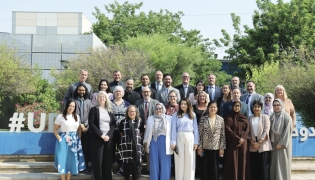
HMC, in partnership with Sick Kids, the hospital for sick children in Canada, also led a multi-organisation workshop, focusing on the future of autism services in Qatar.
It is hoped that the outcomes of the workshop ‘Autism Services for Children in Qatar: Challenges, Opportunities and the Way Forward’ will contribute to the development of a national plan for autism care in the country.
Dr Haitham El Bashir, Senior Consultant and Head of Children Rehabilitation, HMC, said, “Autism is a neuro-developmental disorder directly associated with impaired social interaction and communication skills.
“Understanding and relating to other people can be difficult for someone with autism. Children with autism can have exceptional skills and abilities, but they may need to be supported in a different way. The proper support is invaluable to children with autism and their families and will directly affect how they enter adulthood. Healthcare, education and social services should all contribute to supporting their success.”
Raising public understanding should be a key part of any plan, he added. “Autism is usually evident in a child’s life before the age of three. Parents concerned that their children are displaying signs of autism should seek medical advice, as early detection is linked to better outcomes.”
The Peninsula