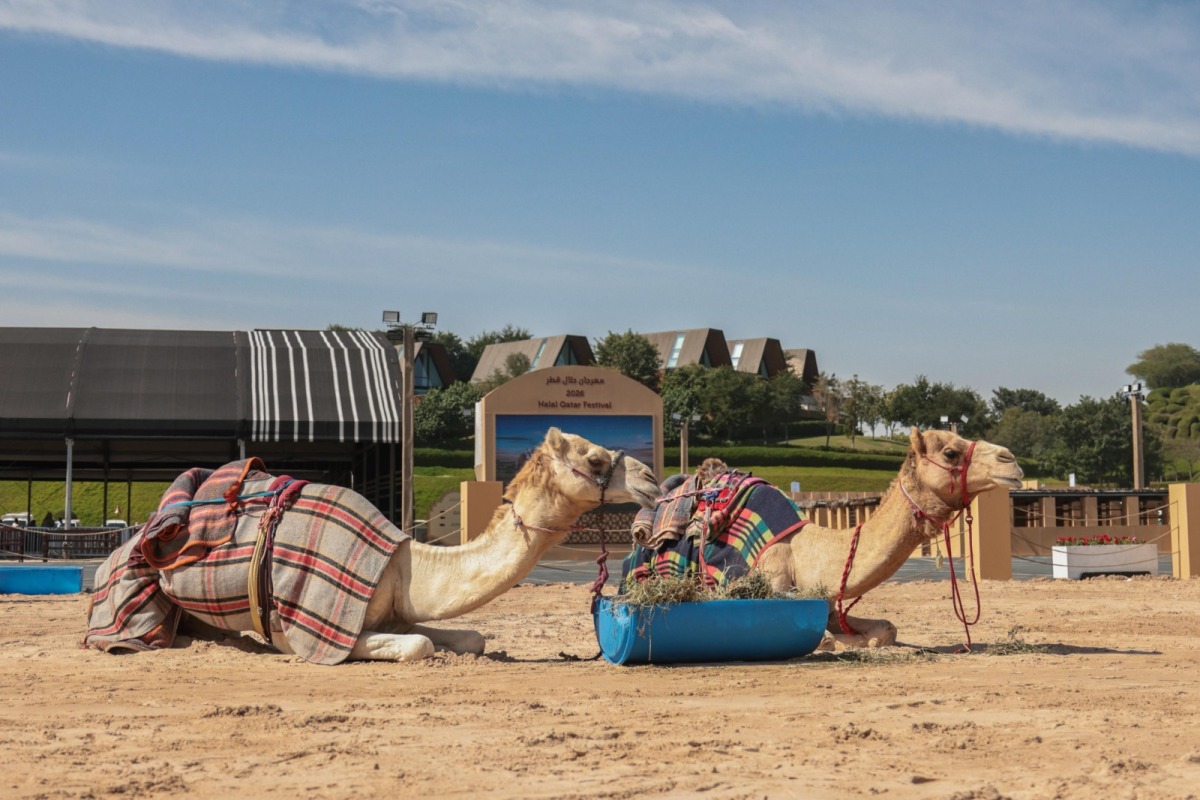
Doha, Qatar: The 14th edition of the Qatar Halal Festival 2026 kicked off on Wednesday at the Katara Cultural Village, amid a distinctive heritage atmosphere and extensive preparations for the start of the competitions.
The festival features wide participation of livestock breeders from both within and outside Qatar.
Director General of the Katara Cultural Village Foundation, Dr. Khalid bin Ibrahim Al Sulaiti, emphasised Katara's commitment to presenting a distinguished edition that reflects the festival's status as one of the most prominent specialized heritage events in the region.
Chairman of the Organising Committee for the Qatar Halal Festival, Salman Mohammed Al Nuaimi affirmed that the festival continues to solidify its position as one of the most prominent specialised heritage events.
He noted that this year's edition builds upon the successes of previous years, with continuous improvements in organising and the diversity of the competitions. Al Nuaimi noted that the Qatar Halal Festival was a leading platform for preserving and promoting the heritage of halal breeding, supporting breeders, and highlighting the authentic values associated with national identity, in addition to opening wider horizons for international participation, reflecting the State of Qatar’s standing in this regard.
He added that the organising committee was keen to provide all the elements that guarantee the festival’s success, whether in terms of judging mechanisms or organisational and logistical aspects, thus ensuring a distinguished experience for both participants and visitors.
The festival program features a series of competitive rounds for the Arabian (Awaridh and Syrian) categories, including rounds for the most beautiful locally bred camel (the Symbol Round), rounds for the most beautiful five yearlings from the herd (the Production Round), as well as elite rounds, in addition to rounds dedicated to the most beautiful stud, the most beautiful individual camel, the most beautiful yearling, and the most beautiful three yearlings, in competitions that reflect the advanced technical level of the participants.
The festival's sections and pavilions were designed in the spirit of Bedouin heritage. The site includes a dedicated livestock display area for participants, an auction and exhibition stage, and a reception hall for VIPs that embodies authentic Arabian hospitality.
The festival also features a local market and a traditional market with Bedouin tents showcasing handicrafts, in addition to art workshops for children designed to strengthen the younger generation's connection to their cultural heritage.
Among the accompanying cultural events are live painting demonstrations by five female artists, inspired by the festival's atmosphere, and performances on the rababa (a traditional stringed instrument), adding an authentic heritage dimension to the events.
The festival also includes a camel riding area for children and a dedicated area for displaying pygmy goats, which are popular with families and visitors.
Seventeen shops are participating in the festival, offering traditional foods, sweets, perfumes, and accessories, along with specialised pavilions for goat supplies, farm equipment, and veterinary services.
This enriches the visitor experience, providing a comprehensive atmosphere that combines heritage, shopping, and hospitality.