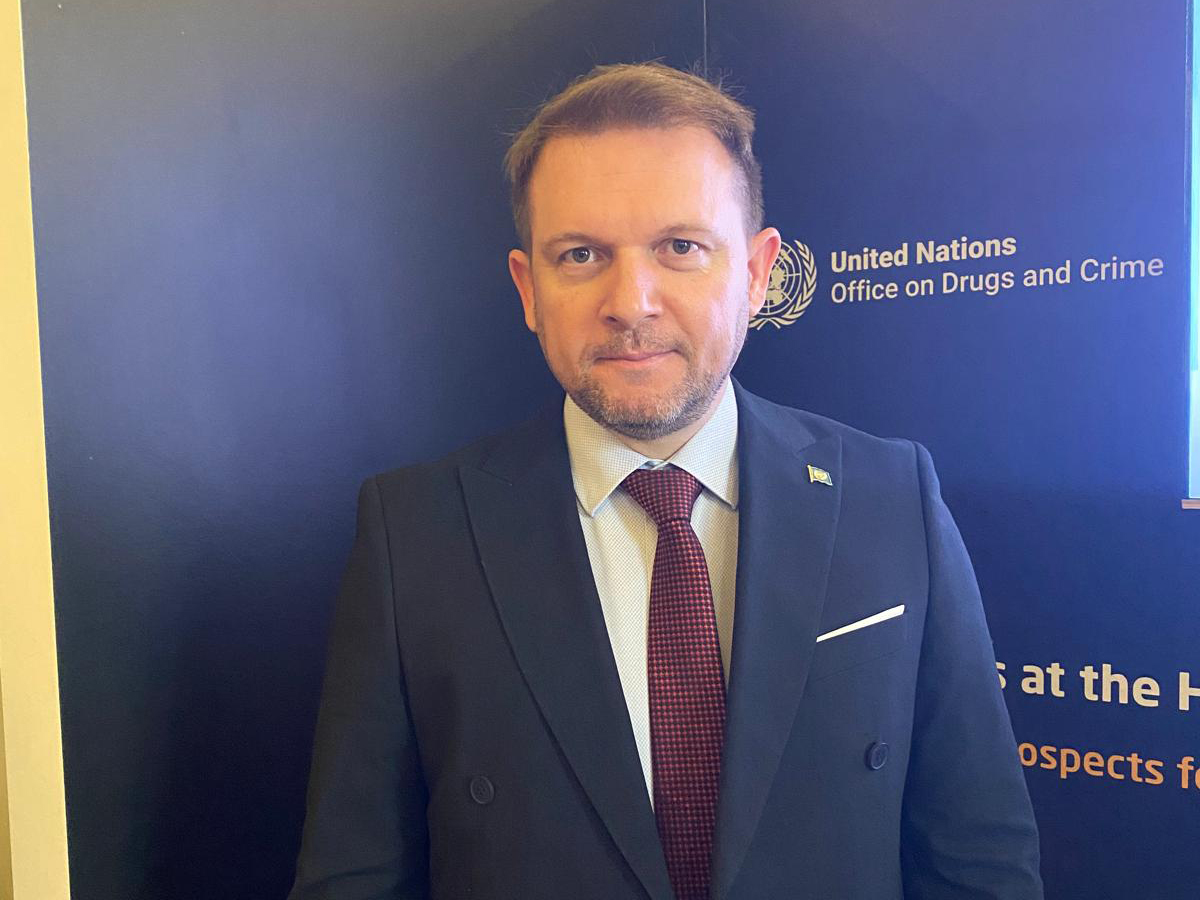
Chief of the UNODC Regional Centre for Combating Cybercrime in Doha Mustafa Ünal Erten
Doha, Qatar: Chief of the UNODC Regional Centre for Combating Cybercrime in Doha Mustafa Ünal Erten, has underscored the growing challenges posed by drug-related risks, particularly in times of social and economic crises, and the crucial role of technology and social support systems in addressing these threats.
Speaking to The Peninsula on the sidelines of Fourth National Human Rights Forum, which opened yesterday in Doha, Erten emphasised that global instability, characterised by uncertainty, crisis, and conflict, creates ideal conditions for criminal networks to exploit vulnerable populations.
“When governments face crises and developmental processes are disrupted, people experience economic, psychological, and personal pressures. These pressures push individuals to seek relief, and criminal networks often capitalize on this through drugs,” he explained.
Erten highlighted that these risks are magnified in societies lacking strong social support systems. “Criminals can take advantage of the absence of protective structures such as strong families or community networks,” he said. He stressed that prevention must start early and be supported by both social and institutional frameworks.
Pointing to a human rights dimension, Erten noted that ensuring citizens’ access to safe environments, both offline and online, is critical. “We must empower communities and individuals, particularly youth, to be aware of the risks and solutions. This is not just a law enforcement matter but also a societal responsibility,” he said.
He praised Qatar’s National Human Rights Committee (NHRC) for prioritising discussions that link human rights with drug prevention and rehabilitation, emphasizing approaches that reduce stigma and discrimination.
Erten also stressed the importance of a holistic approach to drug-related challenges. “Drugs are not just a criminal justice problem; they are also a public health issue. Governments must address this through a coordinated strategy involving law enforcement, customs, primary and secondary healthcare, rehabilitation centers, and treatment programs,” he said.
Modern technology, including artificial intelligence and fast communication tools, further complicates the landscape. While these tools simplify daily life, they also facilitate criminal activity, making it easier for illicit substances to reach vulnerable populations.
“The cybercrime center (Regional Center for Combating Cybercrime in Doha) we established in Qatar, with local support, is one of the pioneering institutions in the UN system addressing both prevention and combating cybercrime in coordination with member states,” Erten said.
He also highlighted the strong partnership between UNODC and Qatar across multiple sectors, including customs, interior, and foreign affairs. “UNODC is the custodian of conventions on drugs, organized crime, corruption, and now cybercrime. This makes it an ideal partner for Qatar and other member states in tackling these emerging threats,” he added.
Erten concluded that addressing drug-related risks requires a comprehensive, multi-dimensional strategy that combines social support, human rights protections, early prevention, healthcare, law enforcement, and technology-aware measures. “Only through a holistic, coordinated approach can societies reduce vulnerabilities and prevent criminal exploitation,” he said.