
TOPSHOT-BANGLADESH-ENVIRONMENT-SUNDARBANS This photograph taken on April 7, 2026 shows a Royal Bengal tiger cooling off from the heat inside the Bangladesh National Zoo in Dhaka. (Photo by Munir UZ ZAMAN / AFP)
Sheikh Sabiha ALAM Satkhira, Bangladesh: Tigers are so feared in Bangladesh's vast Sundarban mangroves that locals invoke spirits to protect against them.
But experts say it is the big cats themselves that need defending.
Abdul Goni Gazi was among the first to raise the alarm for the creatures struggling to grow their numbers under pressure from habitat loss, poaching and climate change.
Known locally as "Goni Tiger", the 45-year-old devoted his life to promoting coexistence between the big cats and the people living on the forest's edge.
Despite the danger, this activist claims to have saved 36 Bengal tigers from guns or traps -- and 106 local residents from the animals' jaws.
He has pulled furious villagers back from the brink of killing tigers -- and, in some cases, dragged home the dismembered bodies of others.
"If we want the Sundarbans and the thousands of people dependent on it to survive, we need the Bengal tigers," he said.
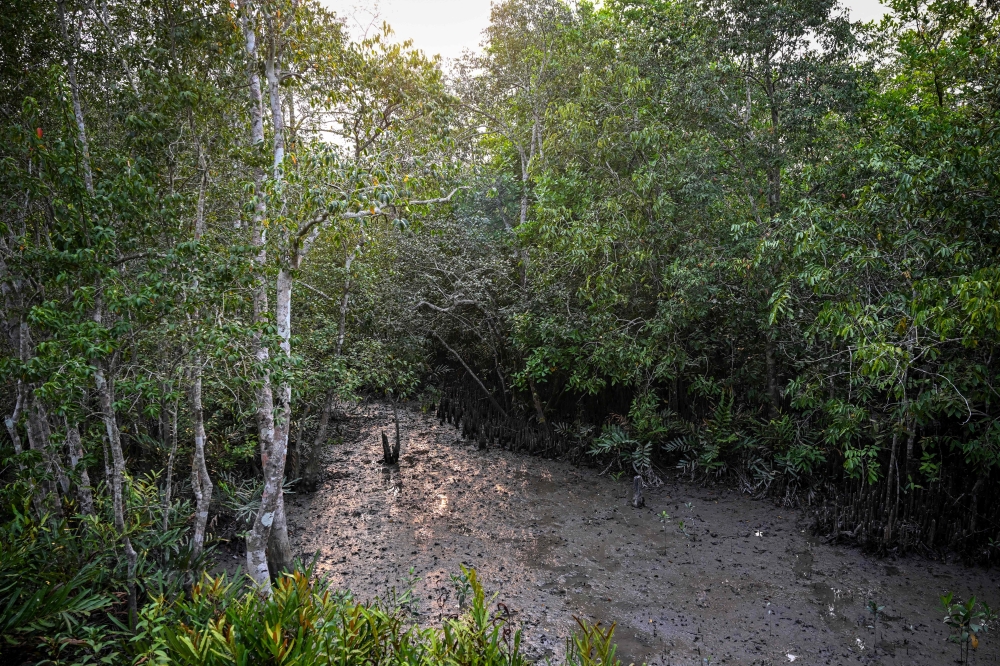
Stretching 10,000 square kilometres (3,900 square miles) across sprawling mangrove forests and tidal rivers, the UNESCO-listed World Heritage site straddles both Bangladesh and India.
Tigers eat grazing animals in the forest, which has the knock-on effect of allowing mangroves to grow and thus help protect coastlines from erosion and storms.
"If a tiger is killed in the Sundarbans, it creates a turmoil in the ecosystem," said Mohammad Abdul Aziz, a zoology expert at Bangladesh's Jahangirnagar University.
The creatures' power is also deeply embedded in people's culture, prompting them to seek the blessings of dozens of spirits before entering the forest.
"If someone chants the name of Mother Bonbibi, she will save his life from tigers, snakes, and crocodiles," said villager Ashutosh Mandal, 63, referring to a deity whose idol is worshipped at temples.
The slow growth has drawn scrutiny over the effectiveness of the nation's conservation efforts, including the latest $4.2 million tiger project.
Chief Conservator of Forests Amir Hossain Chowdhury said habitat loss remains the core challenge.
Rising sea levels and surging tides from increasingly powerful storms -- resulting in an increase in soil salinity -- have degraded agricultural lands, pushing people into tiger territory.
"Human encroachment has pushed (the Sundarbans tigers) into a corner, creating conditions that are not suitable for most species, let alone tigers," Chowdhury said.
Tigers also face other, more direct threats.
Poachers and villagers still kill tigers, undeterred by penalties of a 12-year jail term or $15,000 fine.
"Sometimes they kill tigers on demand -- from home and abroad," said wildlife trafficking expert Nasir Uddin.
"And sometimes they do it for their own safety, so that tigers cannot attack them, when they anchor their boats near forest canals."
Some of the armed bandits who prowl the forests have even used freshwater ponds dug to help the tigers as a trap.