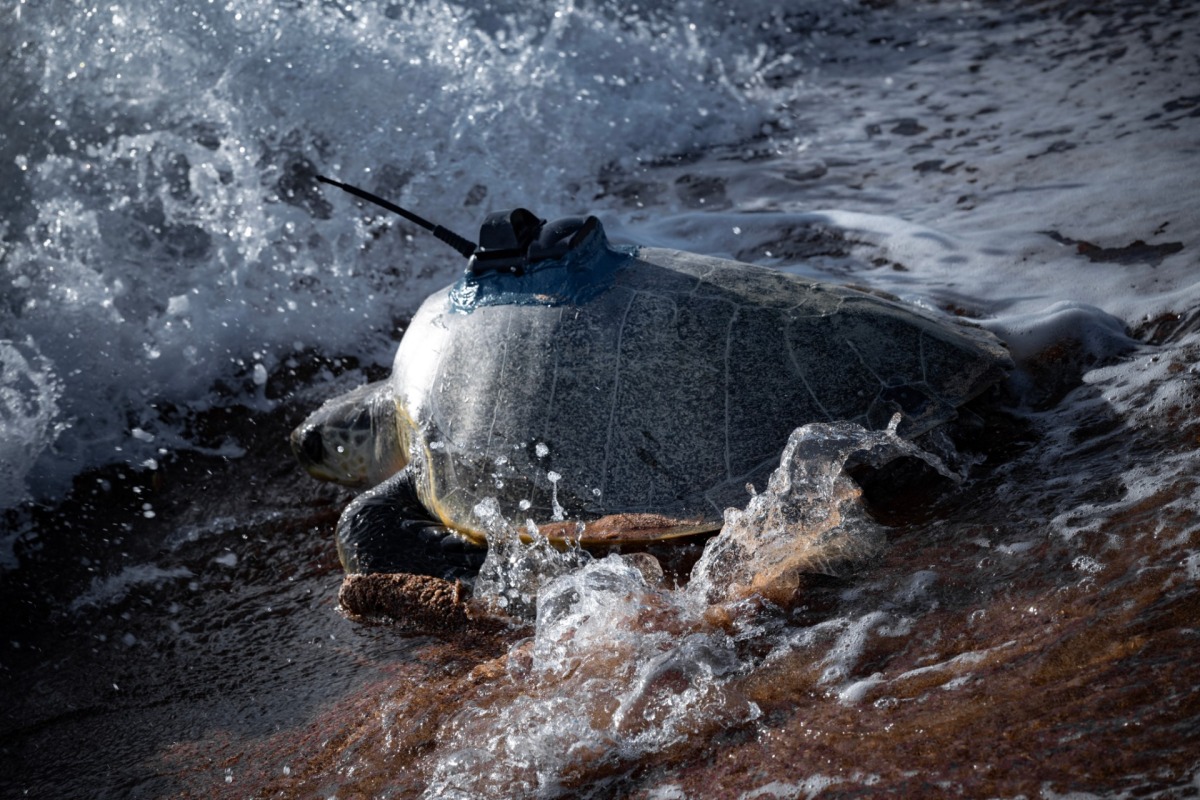
Sea turtles carrying GPS and sensors on their shells are collecting data that can make tropical cyclone forecasts more accurate. Photo by Rob Harcourt / UNSW
Sydney, Australia: Sea turtles fitted with tracking devices and oceanographic sensors are helping scientists in Australia improve tropical cyclone forecasts by collecting critical data from otherwise inaccessible waters.
The storm-chasing sea turtles are gathering information that could revolutionize cyclone forecasting and make communities safer and more resilient during cyclone season, according to a release from Australia's University of New South Wales (UNSW) on Wednesday.
The team analyzed data from dozens of Olive Ridley and Flatback turtles tagged between 2014 and 2024 across northern Australia, which recorded more than 8,000 ocean temperature profiles at depths up to 80 meters before, during, and after cyclones, the release said.
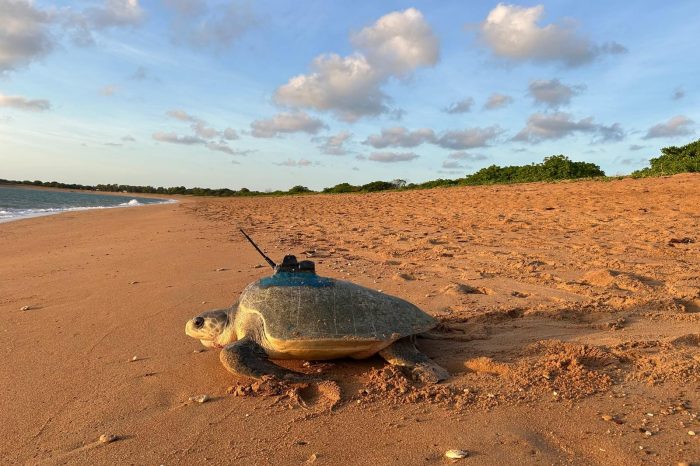 The instruments were attached to turtle shells with a special adhesive designed to degrade with the turtles' natural oils and remain in place for up to a year, it said.
Tropical cyclones draw strength from warm seas, but current forecasts rely mainly on sea surface temperatures and lack data on deeper water layers, reducing accuracy, especially in remote regions, researchers explained.
"Traditional tools like ships and ocean gliders can only sample small areas, and taking measurements from the middle of a cyclone is dangerous," said oceanographer Christopher Chapman from UNSW Canberra, who led the study, published in Environmental Research Letters.
Data from cyclone-chasing turtles during five cyclones, including 2023's Category 5 Cyclone Ilsa, showed significant cooling beneath storms as winds mix surface and deeper waters -- a process poorly captured in existing models, leading to overestimates of cyclone strength, Chapman said.
The relatively low-cost approach could improve the accuracy of forecasts, especially in developing countries, with data "transmitted by satellite almost instantaneously," he said, adding sea turtles could be "the heroes we need" to help save lives and livelihoods across the tropics.