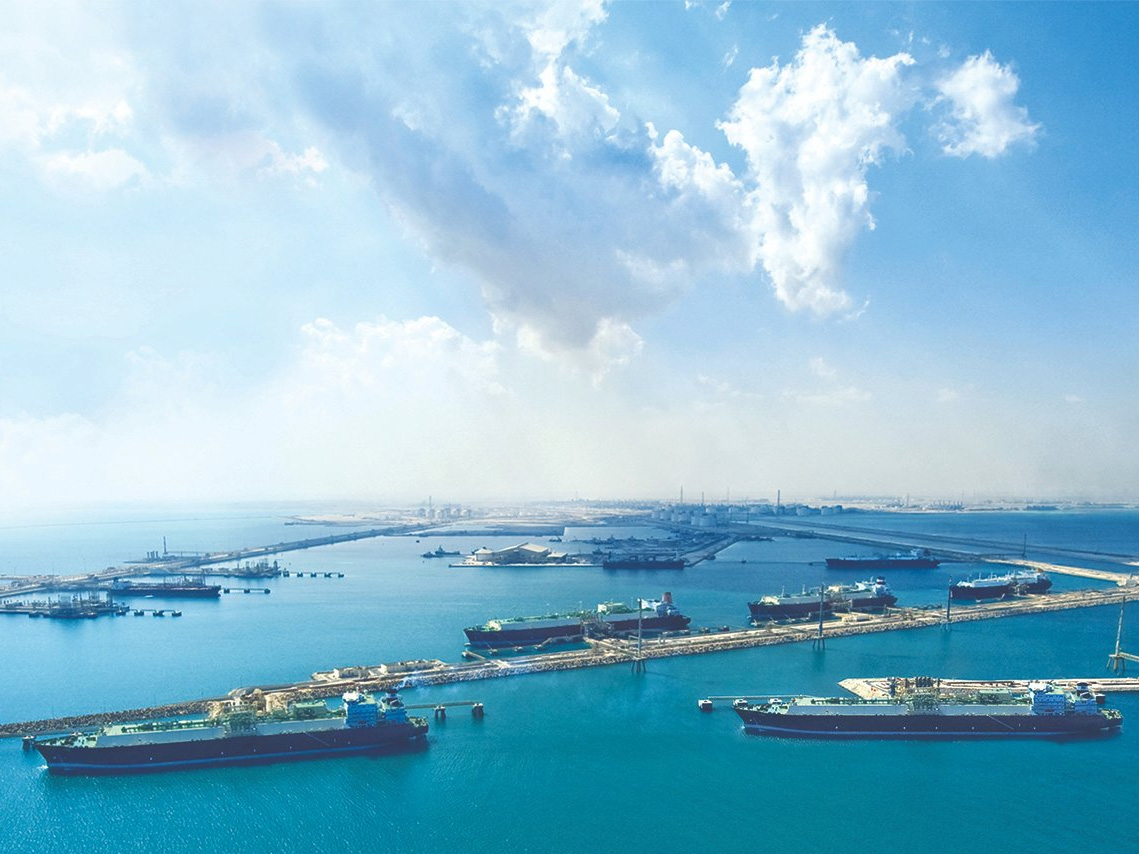
Doha, Qatar: Qatar’s massive multi-billion-dollar North Field expansion remains completely intact and is set to power a robust long-term surge in Middle Eastern gas supplies through the end of the decade, according to a report by Fitch Solutions.
Led by Qatar’s world-scale gas developments alongside complementary projects across the region, analysts at the research entity note that the region’s overall expansion pipeline is positioning the Middle East and North Africa to significantly lift its total liquefaction capacity over the coming years.
“Qatar’s North Field programme remains the single largest source of new global supply,” the report said. “The $28.8bn North Field East project will add 32mtpa across four trains, raising nameplate capacity towards 110mtpa, while the North Field South expansion adds two 8 million tonnes per annum (mtpa) trains to lift capacity to 126 mtpa.”
However, long-term momentum continues unabated with the pre-investment North Field West phase, where QatarEnergy has made significant progress by awarding a front-end engineering design contract to Chiyoda and an engineering, procurement, and construction contract to a consortium including Technip Energies, CCC, and Gulf Asia Contracting for two further 8 mpta carbon-capture-fitted trains targeted for 2030.
While shipping routes normalise and undamaged infrastructure ramps back up, gas production is projected to rebound rapidly, growing by 42.7 percent in 2027 to reach 158.8 billion cubic meters (bcm).
The report noted, “As with Qatar, we anticipate LNG net exports will recover to 7 bcm in 2027, while production returns to growth at 64.1 bcm.”
“The phasing is visible in our forecasts, with Qatari gas production recovering to 158.8bcm in 2027, 203.1 bcm in 2028 and 233.6 bcm in 2029, while LNG net exports climb from 96 bcm in 2027 to 131.3 bcm in 2028 and 158.5 bcm in 2029, before plateauing at 169 bcm from 2030 once both phases reach capacity,” Fitch Solutions added.
Industry observers reaffirm that Qatar’s continued investments in advanced gas extraction technologies and carbon capture initiatives will further bolster its position as a global energy leader. This strategic focus not only supports the country’s economic diversification but also aligns with international efforts to reduce emissions in the LNG sector.
As global demand for cleaner energy sources rises, Qatar’s enhanced capacity and reliable supply are expected to attract additional long-term contracts with key markets in Asia and Europe. These developments underscore the nation’s pivotal role in shaping the future of liquefied natural gas production and supply, both regionally and worldwide.