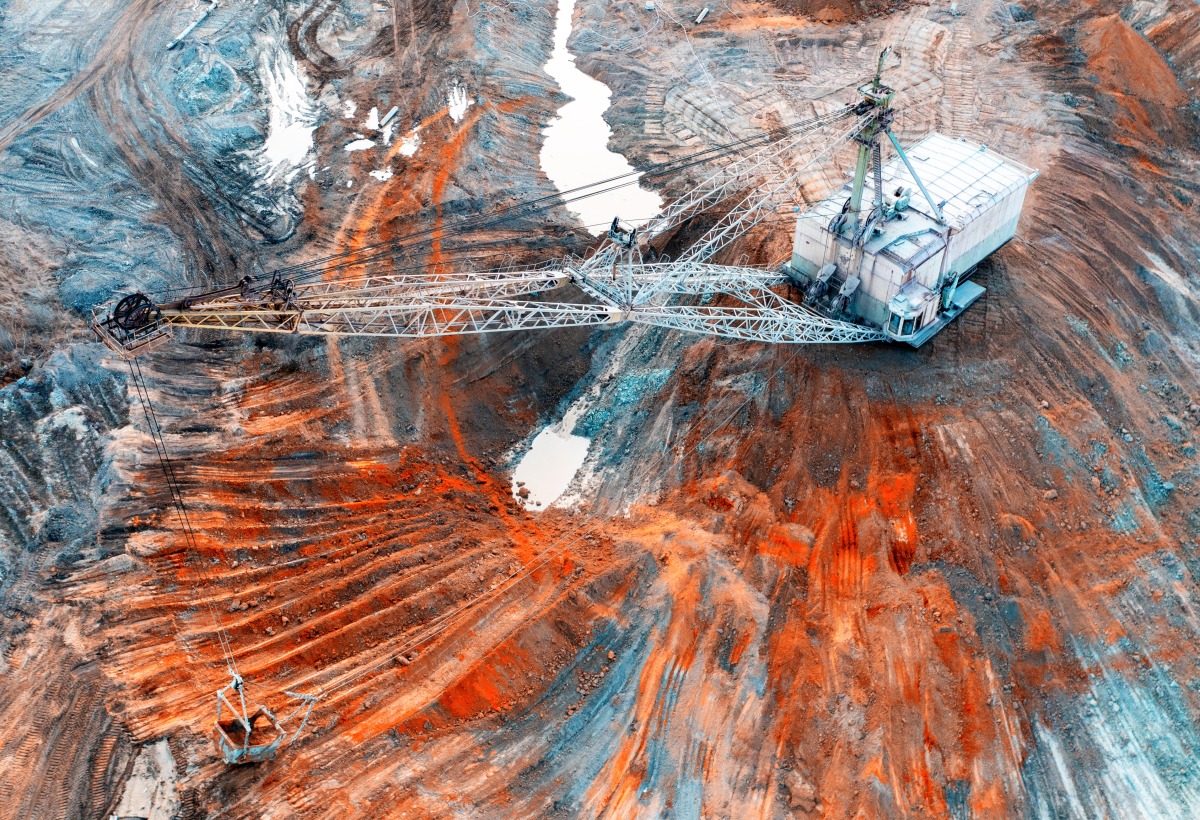
A large walking excavator works in a quarry for the extraction of rare metals.
Doha, Qatar: Powering everything from electric vehicles and artificial intelligence to advanced defence systems, critical minerals are fast becoming the world’s new strategic resource. As geopolitical tensions intensify and supply chains become increasingly concentrated, access to these minerals is emerging as a defining economic and national security challenge of the 21st century.
In its latest Sustainability Research Paper, The Al-Attiyah Foundation examines how the global competition for critical minerals is reshaping industrial policy, energy security and international trade. Titled In Search of Critical Minerals: Challenges and Opportunities, the paper finds that critical minerals are no longer simply a mining issue, but a strategic priority that will influence technological leadership, economic competitiveness and geopolitical influence for decades to come.
The report highlights that the energy transition, artificial intelligence, advanced manufacturing and defence modernisation are creating an unprecedented surge in demand for minerals such as lithium, cobalt, nickel, copper and rare earth elements. According to the International Energy Agency (IEA), demand for minerals used in clean energy technologies could double by 2030 and quadruple by 2040 under a global net-zero pathway.
However, the paper warns that supply chains remain highly vulnerable. More than 70% of global cobalt production comes from the Democratic Republic of Congo, Indonesia produces around 55% of the world’s nickel supply, while China dominates the refining of many critical minerals with an estimated 70-95% market share. Refining has become even more concentrated than mining, with the three largest processing countries controlling around 86% of global capacity.
These vulnerabilities are driving a worldwide revival of industrial policy. Governments are increasingly shifting from prioritising efficiency towards strengthening supply chain resilience, domestic industrial capability and long-term economic security. The report notes that China, the United States and the European Union together account for 48% of global critical minerals policy measures, reflecting the strategic importance now attached to securing reliable supplies.
While attention often focuses on mining, the report argues that the greatest value increasingly lies in processing, refining, manufacturing and recycling. Developing downstream industries can enable resource-rich countries to capture greater economic value, diversify their economies and strengthen industrial competitiveness. Recycling is expected to become an increasingly important source of supply, with recycled lithium, nickel and cobalt potentially meeting 20-30% of global demand by mid-century under supportive policies.
The Gulf region could become a major beneficiary of this shift. Rather than competing directly with established mining jurisdictions, the paper suggests GCC countries are well positioned to become global hubs for financing, processing, logistics and trading, supported by abundant capital, competitive energy costs and world-class infrastructure.
As global competition for critical minerals accelerates, the report concludes that the countries able to build resilient, integrated and sustainable supply chains will be best placed to shape the future low-carbon economy. To read the full report and more publications from the Al-Attiyah Foundation, visit abhafoundation.org.