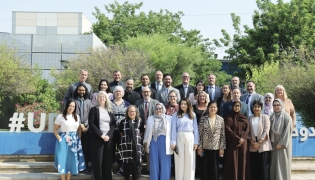
DOHA: Qatar Railways Company (Qatar Rail) has signed a memorandum of understanding (MoU) with Qatar Primary Materials Company (QPMC) to secure the finest construction materials for its projects.
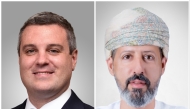
The MoU formalised by Qatar Rail’s CEO, Saad Al Muhannadi and QPMC’s CEO, Eisa Al Hammadi, came at the sidelines of Qatar Construction Specifications Conference and Exhibition.
The signing ceremony, that took place on October 26 in presence of senior officials from both parties, was also an occasion to enhance ties between the two leading companies.
Speaking at the MoU signing ceremony, Saad Al Muhannadi said: “Qatar Rail seeks excellence in all relevant sectors and places premium materials at the heart of the executive strategy of all its projects in order to guarantee a first-class railway network without significant inflation in the Qatari market. The MoU signed with QPMC, seeks to guarantee the flow of the primary materials to our projects and stabilises the market rates.”
For his part, Eisa Al Hammadi said: “QPMC is honoured to be working with a home-grown company responsible for handling pioneer projects in Qatar. We believe this MoU will contribute towards further strengthening our business ties as well as our capabilities to support Qatar’s planned railway network set to facilitate traffic in the capital and its surroundings.”
Established on the instruction of the Qatari government in 2006 to ensure supplies of building materials to the local market, QPMC is at the forefront of facilitating the construction boom in Qatar. The company stands for quality, reliability and efficiency and provides complete solutions for the excavation, transport, storage and delivery of key primary materials in Qatar and the wider region.
Qatar Rail is the company responsible for the design, construction, commissioning, operation and maintenance of the entire rail network and systems within Qatar. Its scope of work is driven directly from the Qatar National Vision as the country aims to sustain its development and provide a high standard of living for its people by 2030.
The Peninsula